I like to believe that government regulations, however kindly conceived, never accomplish their purposes. My ultimate pleasure is finding hugely expensive government regulations that not only fail to accomplish their stated goals but actually make things worse for the intended beneficiaries. (I’ve gleefully reported on them many times in this blog.) But then this happened at the check-out counter of a hospital cafeteria yesterday morning…
Having realized I had left not just my cash but my wallet behind in my car, I was obliged to activate the Apple Pay function on my iPhone. This technology was introduced to consumers in 2014, and yet I knew nothing about it until K introduced it to me about 10 years later.
It’s an indisputable convenience, although I still don’t know where my phone’s signal comes from nor where it should be aimed when I attempt to use it. For lack of certain knowledge, I do the double-click trick, which brings up the desired image on the screen. Then I just hold it out, sort of like a blind man searching for an elevator button, until I hear a ping.
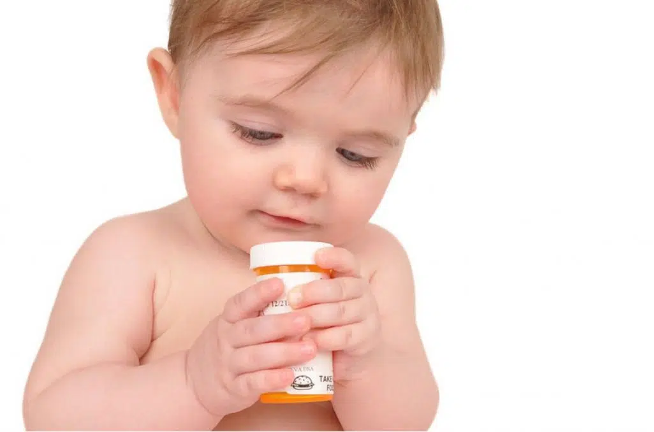
The person on the other side of the cash register (most places still have them to accommodate dinosaurs whose only currency is cash) was a cheerful woman in my general age bracket. She could see the trouble I was having getting my invisible ray to connect with her invisible ray detector. To alleviate my apparently evident embarrassment, she joked about the difficulty she has getting her child-proof pill bottles open. I told her that I’ve found a hammer works well, although sometimes the result is that the tablets are reduced to particles, which means I have to approximate how many of them I’m supposed to take.
I took a table at the adjacent eating area and began to write a memo to a British colleague when my bias against government regulation arrived uninvited in my head.
“I’ll bet those child-proof caps were mandated by some dumbo government regulatory body,” I thought. “Just another costly ‘requirement’ cooked up to solve a problem that wasn’t really a problem. In fact, I’ll bet that they cause more untimely deaths of old people that can’t open them than the number of children they save!”
I smiled. And, with a hopeful heart, I opened my laptop and summoned Nigel to my table.
“Nigel,” I said. “I am hoping you can help me solve a bit of an argument I’m having in my head.”
“I would be honored, sir,” he replied, bowing almost imperceptibly (the depth we had both agreed was correct for our different social statuses).
I explained my interest in the history of child-proof caps and told him what I expected he would find out about them when he strutted off to do his research.
“I’m sure you are absolutely right, sir,” he said. “I suspect I’ll find that the regulation was an overreaction to a highly unusual circumstance and that it has been ineffective and costly, as you have helped me understand about other government regulations in so many of your essays, which I’ve had the pleasure of reading.”
I told him to have his report ready for me in the morning. He agreed.
When I checked in with Nigel today, he filled me in on what he had discovered about those safety caps.
He told me that interest in the subject arose in the US in the late 1950s and early 1960s. During that time, about 120 children under the age of five had died from accidental aspirin poisoning each year. And that aspirin poisoning represented about a quarter of the total fatal childhood poisonings (about 500 per year).
He said that Congress passed the Poison Prevention Packaging Act in 1970, and it was approved by President Nixon that same year. The law mandated not just child-safe caps but also “special packaging” for medicines and household substances dangerous to young children. Child-resistant packaging became mandatory for aspirin products in 1972, and the following year the same requirements were extended to oral prescription medicines.
“Okay,” I said. “It hardly surprises me that one unnecessary regulation led to two or three more. What about the efficacy? Did those regulations actually reduce childhood poisonings?”
Nigel cleared his throat. “Well, sir – that, I’m afraid, is the disappointing part. It seems that they did.”
“What? Really?”
“Apparently so. According to my research, within two years of the aspirin rule, deaths among children under five from aspirin poisoning had fallen 48%. Reported aspirin ingestions fell from 8,146 in the year before the regulation to 4,837 in 1974. And after three years, the CPSC reported that aspirin deaths had fallen 63% and accidental ingestions 47%.”
“Really?” I said.
He cleared his throat again. “I’m afraid so, sir. In fact, it gets worse.”
“According to my research, sir, by 1985, there were no recorded aspirin-poisoning deaths among young children, compared with those very substantial numbers in earlier decades. And deaths from accidental ingestion of drugs generally fell from 96 children under five in 1972 to 27 in 1985.”
“I can’t believe it!” I nearly shouted.
“Quite so,” he responded. “But I have a bit of good news. The studies weren’t strictly controlled. They didn’t account for the fact that poison-control centers improved during that time. Plus, parents became more aware of the hazard of childhood poisoning. Furthermore, the use of aspirin declined as acetaminophen became more popular.”
“That makes sense,” I replied.
“Quite so,” Nigel said.
I looked at him. He was being deferential. So I thanked him for completing the task I had given him “with such assiduousness” and dismissed him.
I opened my laptop and did some investigating myself. (“Is it possible that Nigel was being influenced by one of those renegade pro-government AIs?” I thought.)
Though there is no doubt that the promising numbers reported in those early uncontrolled studies were exaggerated by the external factors Nigel had mentioned, one study I found – a CPSC analysis of aspirin deaths from 1958 through 1990 that controlled for aspirin consumption – concluded that child-resistant packaging itself reduced aspirin-related childhood mortality by about 34% between 1973 and 1990. And for prescription drugs, the analysis estimated a reduction of as much as 45% in deaths that otherwise would have been expected. I also found two later studies that adjusted for external factors that had occurred since then – and once again, the researchers found a substantial independent benefit from child-resistant packaging: a roughly one-third reduction in aspirin deaths and perhaps an even larger reduction in deaths from prescription drugs.
Needless to say, I’m not going to mention those studies to Nigel.
Worth Considering
Three Quick Bites

The Ultimate Marble Race
Normally, if I see a link longer than seven minutes, I don’t hit it. In this case, I couldn’t resist… and the video lasted almost 1.5 hours. Apparently, marble racing on sand has been going on for at least seven years and has become an increasingly popular viewers’ sport. I can understand why. It’s just as exciting as watching a horse race or roller derby! Take a look here.

The Real Reason the Protestant Reformation Happened:
It Started in a Bank, not a Church
A fascinating history of how the medieval invention of banking and bank loans revolutionized commerce, vastly multiplied world wealth, and produced the Protestant Reformation. It is not just edifying, it is, in many ways, surprising and – perhaps best of all – chock full of the biggest names in the 15th and 16th centuries.

Artificial Ignorance
“A groundbreaking study by Just Facts has measured the rates at which premium versions of four leading AI chatbots – namely ChatGPT, Google Gemini, Grok, and Claude – spread fictions from the political left and from the political right,” writes James Agresti in his overview of the study. Read more here. (Thanks to GW for sending this in.)
Worth Considering
Postscript: Did Michael Jackson Steal the Moonwalk from Charlie Chaplin?

Take a look at this video.