
Dr. Peter McCullough said a lot of important things in a recent interview with Dr. Jess Peatross, starting with this observation that I can’t stop thinking about…

Dr. Peter McCullough
For most of 2020, I gave the people running the pandemic the benefit of the doubt. A new virus had arrived. The data were bad. Decisions had to be made before anyone knew enough to make them with much confidence.
And besides, incompetence explains so much of what large institutions do that I usually reach for it before conspiracy.
I held on to that explanation for a long time. What finally began to move me away from it was not a leaked email or a whistleblower. It was a question about hospital advertising.
American hospitals compete for patients the way car dealers compete for buyers. Number one in heart care. Best in the region for cancer. Top-ranked in orthopedics. You can hardly drive to an airport in a major city without seeing a billboard telling you which hospital will fix your knee better than the hospital down the road.
Yet for two years, the entire country was frightened of one disease. And I can’t remember a single hospital claiming to be the best place in America to treat it.
The Wartime Rules
McCullough points out that there were no ads boasting about COVID survival rates, no comparisons between Mayo and Harvard and Stanford and Emory. “If one hospital had found a way to send almost every COVID patient home alive,” he says, “wouldn’t we all have known its name?”
Hospitals normally brag when they do something well. With COVID, they didn’t. And he thinks he knows why. He believes they were embarrassed by their results. I’m not sure that is the whole answer, but I think the question is a good one.
And it leads to the much larger question at the center of the interview: Was the disastrous COVID response mainly the product of fear, confusion, and incompetence? Or was there something built into the system that pushed almost every major institution in the same direction?
McCullough thinks it was the latter.
His argument begins years before COVID, with two laws almost nobody outside public health had heard of: the 2004 BioShield Act and the 2005 PREP Act.
McCullough says these laws helped create a legal structure for treating a biological emergency much as the government would treat a war. Emergency powers expand. Ordinary rules change. Liability protections can become much broader. His phrase for what followed is “a license for corruption.”
I would put it a little differently.
I tend to look first at incentives. They explain more and require less coordination. Give government agencies unusual power. Protect manufacturers from much of the normal liability. Spend billions on a product, then make that product the centerpiece of the national response.
You don’t need a secret room filled with villains to get bad results. Ordinary people responding to the incentives in front of them can do plenty of damage on their own.
That is one reason McCullough’s next point interests me.
The First Mistake: “Untreatable”
From the first months of the pandemic, he says, the official approach to COVID was that there was little or nothing doctors could do for patients early in the illness. Potential treatments were dismissed. Patients were told to stay home, isolate, and watch their oxygen. If they got sick enough, they should go to the hospital.
Meanwhile, one future treatment was spoken of with remarkable confidence: a vaccine.
McCullough asks a simple question: How could they have been so sure about the vaccine before they knew what might work as treatment?
Set the politics aside for a moment. His clinical argument is more interesting.
With a serious respiratory infection, he says, doctors normally want to treat early. They don’t tell a patient to wait until he is desperately ill. Yet with COVID, millions of people were essentially told to do just that. In October 2020, NIH outpatient guidance offered little active treatment for patients who were not yet sick enough to be hospitalized. McCullough says the Infectious Diseases Society of America took much the same approach.
He thinks this was a terrible mistake. And he thinks it was deliberate.
I do too.
Then There Were the Ventilators
McCullough points out that it was known, as far back as 2020, that COVID could produce a variety of lung issues – from air sacs filling and lungs failing (as happens with pneumonia) to severe problems with clotting and oxygen exchange even though parts of the lung remained clear.
He says that he and many other doctors treated some patients whose oxygen saturation fell into the 70s, and at times even the 60s, without immediately putting them on ventilators. If the patient was alert and breathing without great distress, they sometimes tolerated those numbers while treating the patient with various drugs.
In many hospitals, he says, an oxygen reading below 88 pushed the patient toward intubation. Then came sedation, immobility, the risk of another infection, and sometimes death. At the same time, the federal government was racing to produce thousands of ventilators.
“We didn’t need mechanical ventilators,” McCullough says. “We needed early treatment kits.”
Do you remember the reports about those ventilators? How useless they were? How many doctors felt they were killing people by making them immobile, which made them susceptible to all sorts of other lung-related bad outcomes?
Fear and the Vaccine
Early treatments were discouraged. Doctors who promoted them were attacked or censored. Patients were frightened. Hospitals followed remarkably similar protocols. McCullough believes all of this helped push the public toward the same promised exit: vaccination.
“People were infected with a mind virus,” he says. “They really were infected with fear.”
I remember that fear. In the spring of 2020, nobody knew how deadly COVID would turn out to be, but the images coming from Italy and New York were frightening.
And fear does something to judgment. It narrows the range of questions people are willing to ask. And once institutions begin punishing people for asking them, that range can get narrower still.
What followed, in McCullough’s view, looked less and less like ordinary medicine.
Natural immunity was played down or even denied. (I must have had 50 arguments with educated friends on this one issue.) One shot became two. Then came boosters. Then more boosters. People sometimes got extra shots for travel or convenience. One European man reportedly received hundreds of COVID vaccinations by going from pharmacy to pharmacy.
And all the while the WHO and the CDC and so many other major government health agencies were claiming that vaccines not just worked but worked perfectly. Both in protecting vaccinated people from getting COVID and also from passing it on to others.
The mainstream media in the US and most European countries treated those pronouncements like fact, while all the evidence that was coming in was saying quite the opposite. (Even today, you can go on major media and hospital websites and find those lies – somewhat qualified to save embarrassment – still in print.)
McCullough also points to the lack of open public forums. Public-health officials gave press conferences, of course. But that is different from standing in front of an unscreened audience of doctors, patients, and critics and answering whatever questions they ask.
The strange thing about the COVID years wasn’t that experts disagreed. Experts always disagree. It was how little of that disagreement the public was allowed to see.
A Silver Lining
It’s hard to find anything positive about a crime of these proportions, though McCullough attempts to. He says that the collapse in public trust in vaccines generally may turn out to be healthy. If people believe they were misled about one vaccine, censored when they questioned it but pressured to get it, they will naturally begin asking questions about the rest of the vaccine schedule.
Where Responsibility Disappears
Near the end of the interview, McCullough makes a point that sounds almost mundane. I think it may be one of his best: Everyone was following orders.
Doctors followed hospital rules. Hospitals followed federal guidance. Nurses and pharmacists followed protocols. Drug companies operated under emergency rules. Public-health officials relied on committees and agencies.
That is how responsibility can disappear without anyone actually giving it up. Each person can point to the person or institution above him.
Health activists spend too much time arguing with doctors about the decision to push the vaccines, McCullough says, and in many cases, doctors aren’t the people giving the shots. Nurses, pharmacists, and technicians are. His answer is to put the responsibility back on the person holding the needle.
That sounds good if you don’t spend too much time thinking about it. But if you were following the COVID story regularly, as I did, you would know that any time anyone in the health industry spoke out against the insanity of how it was being handled, they would be denounced, delicensed, and sometime even jailed.
It is more than a sad story. It is a frightening indictment of Big Government, Big Pharma, Big Health, and Big Media, and a wake-up call to anyone who wants to believe blindly in these institutions.
You can watch the entire interview here.
Politics
Three Quick Bites
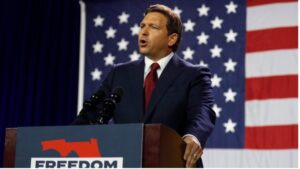
Florida’s Comeback on Election Integrity
Florida used to be the national clown state on federal elections. Remember 2000: a 537-vote margin, hanging chads, and the Supreme Court settling the count. Now, says former Florida elections director Don Palmer, the state is a leading example of how elections can be both fair and honest. According to the Heritage Foundation’s 2026 Election Integrity Scorecard, Florida ranks in the top five in the country in terms of the accuracy and speed of ballot counting and protocols to prevent fraud.
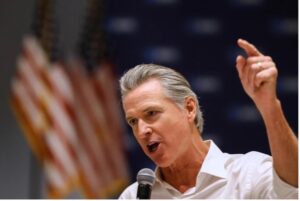
Kudos to Gavin Newsom
I don’t often find myself praising California Gov. Gavin Newsom. But when a politician does something sensible, I figure he deserves credit for it.
On Sunday, Sept. 20, Newsom vetoed a bill that would have made California’s already generous public pensions more generous still. The legislation would have lowered the retirement age for newly hired public-safety workers from 57 to 55. It would also have raised the amount of salary that could be counted toward a pension and opened the door to still richer pension formulas through collective bargaining.
The bill had plenty of political muscle behind it. Public-employee unions wanted it, and it passed the legislature with bipartisan support. Newsom vetoed it anyway. And his reason was so logical I find it hard to believe he said it: California has been down this road before. Pension benefits were expanded during good times, when rising markets made the promises look affordable. Then markets fell, leaving taxpayers with the bill.
That is the problem with promising future benefits based on today’s good fortune. The promise remains long after the good fortune disappears. Newsom said he didn’t want California repeating that history. Neither should California taxpayers.

Propaganda for Kids
Take a look at this 1954 feature-length animated adaptation of George Orwell’s Animal Farm – supposedly funded by the CIA. It’s pretty great when you watch it with that thought in mind.
Worth Considering
Postscript: The World’s Luckiest Olympian
Can winning be sweeter than this?