
In a recent Substack essay – “Four Direct, Reasonable, and Important AI Questions (Which the AI People Will Ignore)” – Freddie deBoer, my favorite Atheist/Socialist, criticized those in the AI world who, like me, acknowledge that the effect of this tech revolution will be huge.
He says that those whose beliefs about AI are maximalist in one direction or another (AI Doom or AI Utopia) are mistaken – that our future is not about becoming “radically ruptured,” and that although “LLMs could prove to be significant and consequential software,” they will ultimately be seen as “just software, just normal technology.”
His essay is structured around four arguments:
1. He says: If everything is changing, why has nothing changed?
My response: This is his strongest-sounding argument and, I think, his weakest. Revolutions often look unimpressive early because adoption trails invention. Electricity, automobiles, and the internet took decades to remake ordinary life. AI has had only three or four years of mass use.
More important, he understates what is already happening. In my own experience, AI has dramatically cut the time required for research, writing, editing, design, legal analysis, and other knowledge-based work. Multiply that across millions of workers and businesses and you can have enormous economic change before the sidewalks look any different.
2. He says: If people really believe AI doom is coming, why haven’t they radically changed their own lives?
My response: Good question. He catches a real inconsistency. Someone claiming a 90% chance of extinction while worrying about his 401(k) allocation probably doesn’t believe his own number.
But this mostly damages the doom argument, not the argument that AI will be economically transformative. I can believe AI will eliminate or radically change millions of jobs without feeling the need to buy a bunker in Alaska.
3. He says: Isn’t it suspicious that most of the predictions say the AI utopia/apocalypse is coming within the lifetime of the person making the prediction?
My response: Also good. There is clearly some psychology involved – some personal motivation for wanting it to happen while they can witness it (and say “I told you so”).
But psychological motivation tells us why someone might believe something. It doesn’t tell us whether the belief is false. People may desperately want cancer cures while correctly predicting rapid advances in cancer treatment.
4. He says: AI predictions should be specific, falsifiable, and time-bound.
My response: This is his best argument. “AI will transform everything eventually” is almost meaningless. Give me dates, measurable outcomes, and conditions under which you will admit you were wrong.
AI enthusiasts should accept that challenge.
My Overall Reaction
DeBoer performs a valuable service because AI boosters badly need intelligent skeptics. He is especially good at exposing hype, unfalsifiable predictions, and the quasi-religious psychology surrounding AI.
But I think he makes one large analytical mistake: He measures the importance of AI mainly by what it has already produced rather than by the rate at which its capabilities and economic usefulness are increasing.
That is precisely where my argument with him would begin. For me, the interesting question isn’t whether AI has changed ordinary life yet. It is whether the curve we are watching is flattening – or steepening.
Here is a link to his essay.
Worth Considering
Movie Review: Un Simple Accident (It Was Just an Accident)

Written and directed by Jafar Panahi
In Persian and Azerbaijani, with English subtitles
Run Time: 103 minutes
Released: Oct. 15, 2025
K had read a positive review of the film and suggested we watch it. Although we sometimes – perhaps often – disagree about comedies and action flicks, we’re usually of the same opinion when it comes to personal, social, and political dramas. We also share a weakness for foreign films, and this one looked promising.
What It’s About
Vahid is an Iranian auto mechanic and former political prisoner. One night a man named Eghbal arrives at his garage and Vahid hears something he recognizes: the distinctive squeak of the man’s prosthetic leg.
Vahid was blindfolded when he was tortured in prison, so he never got a good look at his interrogator. But he remembers that sound and becomes convinced that it was Eghbal. So he kidnaps him and takes him into the desert to kill him.
Then he has a rather important thought: What if he’s got the wrong man?
So he sets out to find other former prisoners who suffered under the same interrogator, hoping they will be able to identify Eghbal. Instead, their arrival makes the situation considerably more complicated.
What I Liked About It
What I liked most about It Was Just an Accident is that it raises serious social and moral questions without feeling obliged to answer them.
Is revenge justified when the legal system that should have punished your torturer was the same system that employed him? How certain must you be before you punish him yourself? And even if you are certain, what happens when the powerless suddenly acquire absolute power over the man who once had absolute power over them?
I also liked the way the movie was directed and shot. Simple and modest. Panahi never seemed to be reminding me that I was watching the work of an important filmmaker. The camera was simply there, showing me what was happening and allowing me to make up my own mind about it.
That’s hard to do. The third wall – the machinery of filmmaking – was virtually invisible. And yet there are some very good images, particularly the scenes in the desert. Striking without looking as though they were composed to be striking.
That modesty fits the story. A movie about moral uncertainty would have been considerably less convincing if the director had been telling us what to think.
What I didn’t Like So Much
Two or three scenes seemed a little dull to me and probably could have been shortened. But I’m reluctant to make much of this complaint. At 103 minutes, the movie doesn’t overstay its welcome, and the slower passages may be part of Panahi’s refusal to turn what is essentially a moral problem into a conventional revenge thriller.
Still, I noticed those scenes. So it counts.
Interesting
Panahi made the film clandestinely in Iran, without government permission. That becomes more interesting when you consider the subject: a group of former political prisoners trying to decide what justice means when the state itself was responsible for their abuse. And the secrecy extended into post-production. The film was edited from a safehouse in Tehran, with the original footage hidden in different locations around the city.
There is something wonderfully appropriate about that. Panahi made a movie about people deciding what risks they are willing to take in the face of state power. The people making the movie had to make a version of that decision themselves.
Critical Reception
The film won major awards, including the Palme d’Or at Cannes, and was nominated for top honors at the Oscars, Golden Globes, and BAFTAs. It was praised for its tense narrative, moral complexity, and emotional depth.
My Rating: 9.1 out of 10
The story engaged me. The acting was convincing. The photography was very good without showing off, and the direction was even better for much the same reason. Most important, it did what I want the best serious movies to do: It took me down into a difficult corner of human nature and left me there to think about it.
There were two or three scenes I might have shortened. That’s about all I can hold against it.
Worth Considering
Three Quick Bites
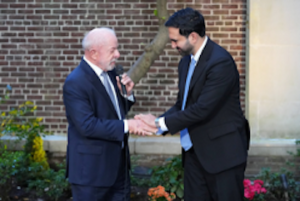
Luiz Inácio “Lula” da Silva and Zohran Mamdani in New York on Sept. 21
“Mamdani Has a Global Ego”
An odd and potentially interesting development: New York’s mayor seems determined to have a foreign policy. Mamdani has been weighing in on international issues that normally belong to Washington, testing how far the political reach of a mayor can extend beyond his city. The larger question is more interesting than Mamdani himself: When did mayors and governors begin behaving like miniature heads of state?
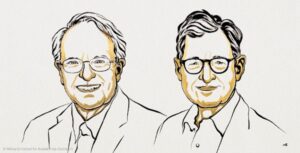
Robert Hall and Michael Woodford
“A Nobel Prize for Macroeconomics Done Right”
An interesting look at the work of Nobel winners Robert Hall and Michael Woodford, particularly where their research undermines some of the assumptions behind traditional Keynesian economics. Hall, to his credit, is also an advocate of a flat income tax. Worth reading to consider the question of how much of what governments think they can accomplish by manipulating demand actually works.

Dante Alighgieri (c. 1265-1321)
One of the Most Touching Love Songs I’ve Ever Read
Dante for me was always a poet one should study rather than read. But today, I found this. I’m going to look for time to catch up.
Travel & Living Abroad
Readers Write: re my essay on Japan in the Oct. 23 issue
Not only do they wash before taking a bath…
From AS: “I was in Osaka once, and I noticed when men went to the bathroom to pee, they washed their hands before they peed! How about that.”
My Response: Yes, that’s just one of so many examples of the importance of cleanliness and personal hygiene in Japan. As longtime readers know, I’ve been writing a book called (tentatively) Wealth Cultures, which explores why some cultures are better at acquiring and keeping wealth. One of the fascinating things I’ve discovered in my research is that “wealth” cultures are almost universally “clean” cultures too.
When I look at the Japanese culture, I can see several explanations for this…
1. Cleanliness has religious roots. In Shinto, kegare – usually translated as impurity or pollution – is something to be removed through purification. Before entering a Shinto shrine, visitors traditionally rinse their hands and mouth. This predates modern germ theory by centuries. Buddhism added its own traditions of cleaning as discipline. In Zen temples, sweeping and cleaning can be part of religious practice rather than menial work.
2. The Japanese distinction between outside and inside is unusually strong. The genkan – the entrance area where shoes come off – is almost a physical border between the dirty outside world and the clean interior. By the same logic, toilet slippers stay in the toilet and bathing involves washing yourself before getting into the tub. (The bath is for soaking and relaxation, not washing dirt off your body.)
3. Japan has an unusually strong social enforcement of considerate behavior. Japanese society puts considerable weight on avoiding meiwaku – causing trouble or inconvenience for others. Smelling bad, leaving rubbish behind, talking loudly on a train, or making a shared toilet unpleasant are impositions on strangers. That gives cleanliness a moral dimension.
4. Density probably strengthened all of this. Edo (modern Tokyo) had perhaps a million inhabitants by the 18th century. In crowded societies like that, controlling shared space has obvious practical value. Interestingly, Edo also developed an extensive recycling economy: Human waste was collected and sold to farmers as fertilizer rather than simply discarded.
5. Modern Japan turned old customs into systems. After the Meiji Restoration, Japan deliberately imported Western medicine, public-health practices, sewage systems, and hygiene education. After World War II, sanitation and public health improved enormously. So today’s cleanliness isn’t some ancient Japanese characteristic. It’s an old cultural predisposition reinforced by very effective modern institutions.
That gets me closer to the explanation I find most persuasive…
6. Cleanliness in Japan has become self-enforcing. Religion helped start it. Density made it useful. Social expectations reinforced it. Modern sanitation institutionalized it. And after enough generations, people no longer need to think about the reasons.
You can see the result everywhere. A Japanese child cleaning his classroom isn’t merely learning how to clean a classroom. He’s learning something considerably bigger: The condition of the common world is partly his responsibility.
That, I suspect, is the Japanese habit you are really noticing.
Worth Considering
Postscript: Dave Chappelle
I’m trying to think of a contemporary comedian whose bits are this smart.