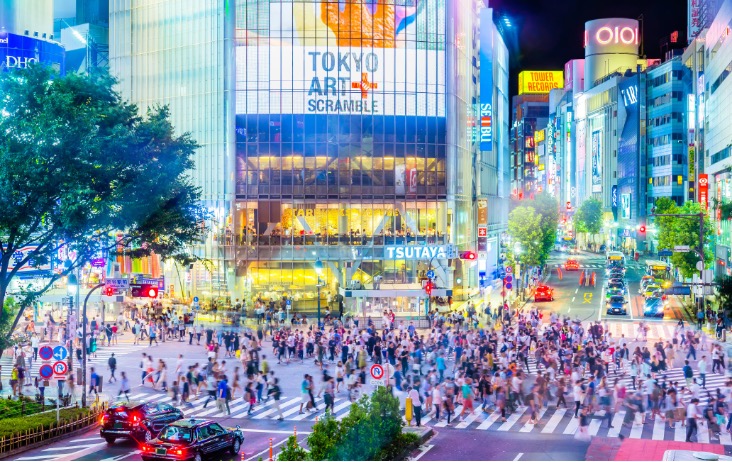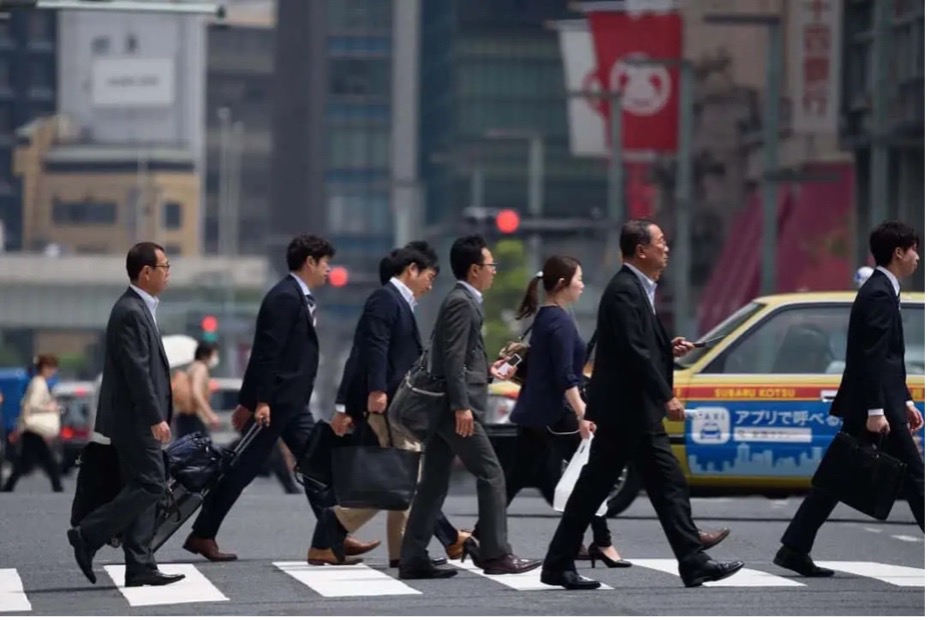
I’ve been to Japan six or seven times, beginning sometime in the mid-1980s. And after all those visits, there is something about the country I still don’t quite understand.
Why does everything seem to work?
I don’t mean perfectly. Japan has plenty of problems. Its population is aging and shrinking. Its economy has spent decades growing at rates that would give an American president nightmares. Its government is heavily indebted. And outside the great cities, it has a growing problem with abandoned houses.
I’m talking about ordinary life.
The trains come when they’re supposed to. The streets are remarkably clean. Public spaces are orderly. People are polite. Things that are supposed to work generally do.
I used to attribute this vaguely to “Japanese culture.” Which is another way of saying I had no idea. So on this latest trip, I began collecting little facts about Japan. Some were amusing. A few were bizarre. But after a while, I began to see a connection between them.
Here are some of my favorites.
1. Japanese schoolchildren clean their own schools.
This one surprised me.
At many Japanese schools, the children don’t simply leave at the end of the day. Instead of janitors coming in to clean up after them, the students themselves clean the classrooms, hallways, stairs, and other common areas. They also commonly take turns serving lunch.
At first, this sounds like a charming Japanese custom. But think about what it’s teaching. If you know you’re going to be cleaning the floor later, you may be less inclined to throw something on it now.
2. Which may help explain another mystery: Where are all the garbage cans?
Anyone who spends time walking around Tokyo eventually notices this. The city is astonishingly clean. But there aren’t nearly as many public trash cans as you’d expect. Many disappeared after the 1995 sarin gas attack on the Tokyo subway. Yet Tokyo didn’t subsequently disappear beneath a mountain of Starbucks cups and potato chip bags.
People carry their garbage until they find somewhere appropriate to dispose of it – rather different than the American solution to litter.
Our solution is to install more garbage cans and hire more people to empty them. The Japanese solution seems to be: Don’t throw your garbage on the ground.
3. They return lost money.
Tokyo police deal with millions of lost objects every year. Wallets, phones, umbrellas, bags, credit cards – and enormous amounts of actual cash – are routinely turned over to the police.
Obviously, not everything comes back. Japan has thieves, too. But the return rate for lost wallets is extraordinarily high. Which made me wonder: Are Japanese people simply more honest?
Maybe.
But Japan has also created an elaborate lost-property system that makes honesty easy. There are police boxes everywhere. Everyone knows where found property goes. Returning something isn’t an extraordinary act of virtue. It’s what you’re supposed to do. That distinction becomes important.
4. Japanese companies sometimes adopt their executives.
Japan has an old tradition of adult adoption. Historically, if the owner of a family business didn’t have a capable son to inherit it, he had another option. He could find a capable adult and adopt him. Sometimes the man married the owner’s daughter, entered the family, took its surname, and eventually took over the business.
This strikes me as a wonderfully Japanese solution to a universal problem. Every successful businessman eventually discovers that genetics is an unreliable executive-recruitment strategy. The Japanese found a loophole.
5. You can be Shinto and Buddhist and not religious.
Ask a Japanese person his religion and he may tell you he doesn’t have one. But around the New Year holiday, he may visit a Shinto shrine. He may have a Western or Christian-style wedding. And when he dies, there’s a good chance his funeral will be Buddhist.
This doesn’t seem to bother anybody.
Westerners tend to ask, “But what do you actually believe?” The Japanese answer seems to be, “Why do I have to choose?” There is something appealing about that.
6. Even Japanese addresses work differently.
In America, we usually locate a building by the street it’s on. In Japan, many streets don’t even have names. An address works by successively narrowing down the location: prefecture, city, district, neighborhood, block, building.
It’s a small thing. But once you notice it, you begin noticing how many Japanese systems evolved independently of Western ones. They aren’t slightly different versions of ours. They began with different assumptions.
7. Two-thirds of Japan is forest.
This was another surprise.
After spending days surrounded by the seemingly endless urban mass of Tokyo, it’s strange to learn that roughly two-thirds of Japan is covered by forest.
Most of the country is mountainous. So 125 million people have been squeezed into a relatively small portion of the available land. Suddenly, some other Japanese peculiarities begin making sense. Tiny apartments. Tiny restaurants. Tiny gardens. Extremely efficient public transportation. And an almost obsessive talent for making small spaces beautiful.
Scarcity forced efficiency. Eventually, efficiency became an aesthetic.
8. And despite all that crowding, Japan has millions of empty houses.
This is the opposite problem.
Japan now has more than nine million vacant homes. They’re called akiya. In some rural areas, houses can be purchased for absurdly low prices because there simply aren’t enough people who want to live in them. So Japan has managed to have a shortage of space and a surplus of houses at the same time.
Which is a useful reminder that no society, however well organized, escapes demographics.
9. The Japanese wash before taking a bath.
This sounds backward until you understand it.
You don’t get into the bathtub to wash yourself. You wash yourself first. Then you get into the tub. The bath is for soaking and relaxing, not cleaning. Traditionally, several members of a family could use the same bathwater – which makes perfect sense once everyone entering it is already clean.
Again, there is a system.
There always seems to be a system.
10. And then there are the toilets.
I have encountered Japanese toilets sophisticated enough to require several minutes of study before using them. Heated seat. Bidet. Dryer. Automatic flushing. Sometimes music or artificial flushing sounds to preserve modesty. There are buttons whose function I still don’t understand and am unwilling to investigate experimentally.
And yet in traditional settings you may still encounter special slippers that are worn only in the toilet.
That combination fascinates me. Japan doesn’t seem to regard tradition and technology as enemies. They simply put the electronic toilet next to the ancient custom and carry on.
11. Even bringing home a souvenir is complicated.
The Japanese custom of omiyage is usually translated as “souvenir,” but that doesn’t quite capture it. You go somewhere. You come back. You bring something for the people who didn’t go. Usually food. Often beautifully packaged. There are stores at train stations and airports filled with boxes specifically designed for this purpose.
The gift isn’t necessarily expensive. That’s not the point. The point is that while you were away, you remembered the people you left behind.
Which brings me back to the question I started with: Why does Japan work so well?
I don’t think it’s because Japanese people are inherently nicer, more honest, cleaner, or more disciplined than everybody else. Explanations based on national character always make me suspicious.
And there are costs to the Japanese system. The same social pressure that keeps a subway car quiet can become conformity. The same concern for one’s obligations can make working life oppressive. The same reluctance to inconvenience other people can discourage individuals from saying what they really think.
There is a price for order. But after watching Japan for 40 years, I think I’ve finally begun to understand something I’d missed.
A surprising number of Japanese customs teach essentially the same lesson. Clean your classroom because other people use it. Carry your garbage because other people use the street. Return the wallet because it belongs to somebody else. Bring back omiyage because other people covered for you while you were away. Wash before entering the bath because somebody else may use the water. Be quiet on the train because somebody sitting three feet away may have had a long day.
Each one is a tiny inconvenience. That’s the part I hadn’t noticed before.
We tend to think a well-functioning society is created by big things – good laws, competent government, advanced technology, good infrastructure. Japan has all of those. But perhaps civilization is built somewhere much smaller.
It is built when millions of people accept tiny inconveniences for the benefit of people they don’t know. And once enough people do that, something remarkable happens.
Nobody experiences it as sacrifice anymore. They experience it as the way things are done.
Politics
Can the Democrats Make America More Affordable Again?

House Minority Leader Hakeem Jeffries in Washington, DC, Sept. 16
The Democrats are winning the rhetorical war on the issue of affordability, which, the pundits say, will determine the mid-term elections.
And they are happy to talk about it.
* Hakeem Jeffries, House Minority Leader, speaking on the Capitol steps Sept. 16: “House Democrats are determined to make life more affordable for the American people.”
* Hakeem Jeffries, PBS NewsHour interview, Sept. 29: “Life is far too expensive for the American people, and everyday Americans need us to decisively act… dealing with the affordability crisis is a top priority.”
* Chuck Schumer, Senate Minority Leader, Senate floor, Jan. 5: “The cost of living will remain the number one focus for this week, this month, this year, and beyond… Democrats will not relent on this issue of how difficult it is for Americans to pay the bills of things they need.”
* Pete Aguilar, House Democratic Caucus Chair, Feb. 25 House Democratic Caucus press release: “Democrats are laser-focused on lowering costs and improving the lives of hardworking American families.”
* Ted Lieu, House Democratic Caucus Vice Chair, Feb. 25 House Democratic Caucus press release: “We are laser-focused on the affordability crisis and how to tackle it.”
* Suzan DelBene, Chair of the Democratic Congressional Campaign Committee, Feb. 25 House Democratic Caucus press release: “Democrats are focused on lowering costs for hard-working families just trying to get by.”
* Abigail Spanberger, Dec. 25, Virginia governor-elect at the time, unveiling her agenda for the 2026 legislative session: “Today, I am proud to unveil… our agenda, to build a more affordable Virginia… We will work to make everyday life more affordable for Virginians.”
That all sounds good to me. But what are the facts? Decide for yourself:
Overall Inflation
* The consumer price index rose an average of 5% a year under Biden. It rose 1.9% a year in Trump’s first term and 2.9% so far in his second.
* In March 2021, Democrats passed a $1.9 trillion spending package, mostly transfer payments and aid to states and localities. This came on top of the bipartisan spending in late 2020.
* As inflation picked up in 2021, Democrats urged the Federal Reserve not to raise interest rates.
Housing
* The Biden administration relaxed mortgage underwriting standards, which let borrowers qualify for bigger loans.
* Home prices rose an average of 5.3% a year under Biden. They rose 2.7% a year in Trump’s first term and 3.7% so far in his second.
* Home prices and rents are now rising fastest in the Northeast, the West Coast, and parts of the Midwest. Reasons include zoning, permitting, rent control, and “just cause” eviction laws in those places.
* Over the past year, home prices rose fastest in metro areas run largely by Democrats – Boston 4.4%, New York City 4.4%, Minneapolis 3.7%, Los Angeles 3.4%.
* Over the same year, they rose far less in Sun Belt metros – Dallas 1.9%, Atlanta 0.4%, Houston 0.3%, Tampa 0.6%.
* Building an apartment costs about 2.8 times as much in California as in Texas.
* Some “affordable” housing projects in California cost more than $1 million per unit to build. One reason is prevailing-wage mandates, which Democrats want to require for every project that gets federal money.
Minimum Wage
Democrats want to raise the federal minimum wage from $7.25 to $15 or more an hour. Most Democratic-run states already require at least $15. A federal increase would therefore fall mainly on lower-wage states, including Texas, Iowa, and New Hampshire (all $7.25) and Ohio ($11).
Gasoline
* Adjusted for inflation, gasoline averaged $3.89 a gallon under Biden. It averaged $3.27 in Trump’s first term and $3.43 so far in his second, even with the war in Iran.
* The Biden administration canceled leases in Alaska’s Arctic National Wildlife Refuge. It banned new offshore drilling along much of the Gulf of Mexico and the Atlantic coast and paused leases on federal lands.
* In California, gasoline costs $6.37 a gallon and diesel $8.40. Reasons include cap-and-trade, the low carbon fuel standard, and heavy fuel taxes, which have also pushed refineries to close.
Electricity
* Since the pandemic, electricity rates have generally risen with inflation. The exception is Democratic-led coastal states that closed fossil-fuel and nuclear plants early and turned to offshore wind and batteries.
* Average residential electricity rates in Democratic-led states, in cents per kilowatt-hour – California 33.6, Massachusetts 30.5, New York 29.9, Rhode Island 28.3, New Jersey 25.2.
* Rates in Republican-led states are about half that – Florida 15, Nebraska 13.8, Tennessee 13.7, Utah 13.1.
Healthcare
Premiums for employer health plans have roughly doubled since the Affordable Care Act passed in 2010, rising at about twice the rate of inflation.
Tariffs and Taxes
* In the 2020 campaign, Biden promised to repeal the tariffs from Trump’s first term, but he never did. Labor unions back many of those tariffs.
* Democrats want to raise taxes on business, which critics say would be passed on to consumers as higher prices.
Worth Considering
Three Quick Bites

Worth Reading: “The Heirs of Carlos the Jackal”
In 1970, a 20-year-old Venezuelan walked into a Beirut newspaper office. He didn’t want a reporting job. He wanted to fight, and the deputy editor happened to be recruiting for the Popular Front for the Liberation of Palestine. Within a few years the world knew him as Carlos the Jackal. In this piece in The Free Press, Jay Solomon uses Joby Warrick’s new biography of Carlos as his starting point. But what kept me reading was the second half: the people walking a remarkably similar road today.
Uber Tours Is Here!
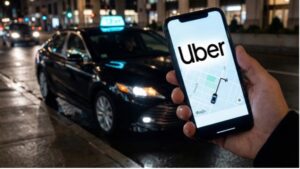
First it was the taxi business. Then it was the home delivery business. Now it’s the travel business. I love it! This is – if you think it through – a prime example of my rule of “one step removed”: When you are introducing new products, and especially new product lines, your chances of success are much better if the change is limited to just one aspect of how the business works. One form of marketing, one kind of product, one level of service or quality, etc. This is what they did here. If you like Uber – and especially like their Uber Black service – what could be easier than to use them for driving trips when touring.

Fender Guitars… who knew?
Just because Leo Fender founded one of the most famous guitar companies in the world doesn’t mean he could play the instrument himself. His own musical ability didn’t extend beyond a few piano lessons and a little bit of saxophone. According to some, he couldn’t even tune a guitar. His prowess for creating instruments was rooted in a passion for electronics. He opened a radio repair store in 1938 when he was 29 years old. Eight years later, Fender Manufacturing (later the Fender Electric Instrument Co.) was born. Read the whole story here. (Thanks to VIP reader GM for sending this in.)
Worth Considering
Postscript: Speaking of Guitars…
Here, for your enjoyment, is an acoustic cover of Radiohead’s “Creep” – with a jazz vibe.