

For the second time in two years, Professor Fujii, one of the featured speakers at our conference in Tokyo, invited Sean, Nicole, me, and a handful of people from both our teams to spend an evening at a geisha house. I went the first time expecting a cultural curiosity, the sort of thing you do once so you can say you did it. I went the second time because I hadn’t stopped thinking about the first – very positively.
There are plenty of tourist-friendly venues that present themselves as geisha, but experiencing traditional geisha is harder to get into than most people realize. There aren’t many authentic geisha houses left, and those that are authentic don’t take walk-ins. To patronize one, you have to be vetted by an established patron – as we were by Professor Fujii.
You realize the exclusivity of the real geisha houses the moment you take off your shoes – not just by the way you are treated, but also by the way you are expected to behave. Respectfully and correctly.
The word geisha means “art person,” and the women who earn the title train for five or six years in classical Japanese dance and singing, and the traditional Shamisen. They are also very evidently trained in Japanese eating, drinking, and conversational etiquette. Their skillfulness in conversation surprised and delighted me, as did their skillfulness in making guests feel welcome. (And, by the way, that applies equally to female and male guests. The women execs who were with us were, if anything, treated with greater attention and affection than the men were.)
After initial drinks and toasts, the music and dancing begins. I’ve never studied Japanese dance and can’t pretend to understand what I was watching. I only know that a trained geisha dancer moving slowly across a tatami floor and gesturing with a fan in either hand is a thing of beauty. The performance held my attention as completely as the best Western dance performances that I’ve seen.
After the dancing, we moved on to a series of what I’d call guest-participation games. Really fun games.
In one (Konpira fune fune), you kneel across from a geisha with a little lacquered table holding a sake cup between you, and you take turns tapping the cup with an open hand in time to the music – unless, that is, your opponent has snatched it away (either one can do it), in which case you must tap the table with a fist instead. It sounds easy, and it is. For about four bars. Then the music speeds up, your hand falls a beat behind your brain, and the room roars with laughter. The loser drinks. (And guess who drinks more.)
In another (Tora tora), the two players hide behind a folding screen and leap out as either a tiger, an old woman, or a samurai. The tiger eats the old woman, the samurai cuts down the tiger, and the old woman somehow defeats the samurai. Again, the loser drinks.
Within minutes, Professor Fujii’s people and ours were shouting, laughing, and trash-talking a woman in a silk kimono who had just beaten us for the third straight time. A little friendly competition did what an hour of polite conversation never could.
What stayed with me, though, was something unique and – for me, at least – much rarer.
For two hours, every one of us was made to feel like the most important person in the room. Your glass was never empty. Your jokes landed. Your stories, even the long ones, were received as if they were exactly what everyone had been hoping to hear. I’ve spent four decades studying the art of persuasion, and I’ve never seen it done with such grace. It’s a skill trained as rigorously as the dance, and it looks effortless precisely because it took years to learn.
And it’s disappearing. In the 1920s, Japan had about 80,000 geisha. Today, there are perhaps 1,000. In the old castle town of Morioka, four remain, and three of them are over 70. Few young women want to commit to the training anymore, and I understand why. Six years of discipline is a hard sell in a world that promises everything by Thursday.
Health & Well-being
Big Health’s Smoothest Scam
Making Millions of Healthy People Unhealthy Overnight

I came across an article a few days ago on Lies are Unbekoming, a Substack publication, that surprised and delighted me.
Not because it told me something I didn’t know. Readers of this blog know that I have long been suspicious of what I call Big Health – including the government health agencies, medical associations, insurers, and the other institutions that make up our enormous medical-industrial complex.
I have written before about one of the smoother tricks this industry has used to expand its market: changing the definition of a disease or medical condition so that millions of healthy people suddenly qualify as unhealthy.
I knew, for example, about the 2017 change in the definition of hypertension. And I knew about the controversy over vitamin D levels. There have been enough examples of this over the years that I had come to see it as one of those things Big Health does from time to time.
What impressed me about this particular article was that the author had done the work I had never done. He had collected 12 examples of it in one place.
One or two examples can be dismissed as coincidences. Even three or four can be explained as good-faith attempts to improve medical care. But when you put a dozen of them together and see the same thing happening again and again, it gets harder to ignore the pattern.
The author’s thesis is stronger than mine. He believes the thresholds were repeatedly lowered to create larger markets for pharmaceutical products. I wouldn’t claim that without evidence of intent in each case.
But I don’t have to.
The medical-industrial complex has a long, documented history of financial conflicts. Drug companies pay researchers, consultants, and medical experts. Members of guideline committees have had financial relationships with companies selling the drugs affected by their recommendations. Hospitals make money from treatment. Laboratories make money from testing. Doctors and medical practices make money from monitoring.
So when committees repeatedly change definitions in ways that convert millions of healthy people into patients – and those changes create billions of dollars in new medical business – I think suspicion is reasonable.
The 12 Examples from the Article
1. Hypertension: 140/90 Becomes 130/80
In November 2017, the American College of Cardiology and the American Heart Association changed the definition of hypertension from 140/90 to 130/80.
The effect was immediate. About 31 million Americans who had not been hypertensive the day before suddenly qualified for the diagnosis.
The author describes it perfectly: “Nothing happened to their bodies. What changed was the number on the wall of the exam room.”
Following the change, about 46% of American adults qualified as having hypertension. The guidelines did recommend lifestyle changes rather than drugs for many people newly captured by the lower threshold. Still, the potential population for medical monitoring and eventual treatment expanded enormously.
2. Overweight: BMI 27.8 Becomes 25
In 1998, the National Institutes of Health changed the American definition of overweight.
Previously, the threshold was a BMI of 27.8 for men and 27.3 for women. The new standard became 25 for everyone.
CBS News reported the result bluntly: “29 million more Americans are overweight than previously thought.”
They weren’t, of course. They weighed exactly what they had weighed the previous day. But 29 million people had moved into a new medical category.
That looks especially interesting today because eligibility for the new GLP-1 weight-loss drugs is based partly on BMI. Nobody on the 1998 committee could have anticipated Ozempic, Wegovy, Mounjaro, or Zepbound. But the definition they adopted helped establish the much larger population that could eventually become customers for them.
3. Chronic Kidney Disease: Aging Becomes a Diagnosis
In 2002, the National Kidney Foundation adopted a new five-stage system for chronic kidney disease based largely on estimated glomerular filtration rate, or eGFR.
The new system resulted in an estimated 26 million American adults being classified as having chronic kidney disease.
The controversial part was Stage 3. An eGFR below 60 could qualify a person for CKD even without other evidence of kidney damage. Yet kidney filtration normally declines with age.
That meant an otherwise healthy 70-year-old with an eGFR of 55 could acquire a diagnosis of chronic kidney disease for something that, in many cases, would never progress to kidney failure.
4. Cholesterol: The Ratchet Keeps Turning
The cholesterol story took place over decades.
In 1988, the National Cholesterol Education Program defined total cholesterol above 240 mg/dL as “high.” Later guidelines progressively expanded the population eligible for treatment. In 2013, ACC/AHA guidelines moved away from treating a particular LDL number and toward a 10-year cardiovascular-risk calculation, which again expanded statin eligibility.
The financial-conflict issue here is particularly well documented. A BMJ investigation reported that most members of one influential cholesterol-guideline panel had current or recent financial ties to drug manufacturers.
Each revision may have had a defensible medical argument behind it. But each also enlarged the market for cholesterol-lowering drugs.
5. Diabetes: 140 Becomes 126
Until 1997, the fasting blood-glucose threshold for diabetes was 140 mg/dL. An expert committee lowered it to 126.
H. Gilbert Welch, author of Overdiagnosed, estimated that the change immediately turned about 1.6 million Americans into diabetics.
There was a reasonable argument for lowering the number. Evidence suggested that diabetic retinopathy began increasing around that level. But the person whose fasting glucose was 130 did not undergo any biological change when the committee voted. His medical status changed, and with that diagnosis could come years of testing, monitoring, drugs, and doctor visits.
6. Osteopenia: A New Condition Is Born
This may be my favorite example.
In 1994, a WHO study group established diagnostic categories based on bone-mineral density. A T-score of -2.5 or lower became osteoporosis. Between -1.0 and -2.5 became a new category called “osteopenia.”
Here is the odd part. The T-score compares an older person’s bones with those of a healthy young adult. But bone density normally declines as we age.
So a 65-year-old woman can be diagnosed with low bone mass partly because her bones are being compared with those of a woman 30 or 35 years younger.
The commercial sequel is interesting. Merck launched Fosamax in 1995, a year after the WHO report. The company helped finance the spread of bone-density scanners. Medicare later began reimbursing bone-density screening, and testing exploded.
The author puts it more strongly than I would: “A category was invented. A drug was launched to treat it. The category ensured a patient population.”
Whether it was planned that way I can’t say. I can say that the new category created an enormous new market.
7. Pre-Diabetes: 110 Becomes 100
The 1997 diabetes committee also created an intermediate category called impaired fasting glucose, covering readings from 110 to 125 mg/dL.
Then, in 2003, the American Diabetes Association lowered the bottom of that range from 110 to 100.
That small numerical change vastly increased the population in the category. Today, roughly one in three American adults qualifies as pre-diabetic.
The ADA itself has described pre-diabetes as a risk state rather than a disease in its own right. Identifying that risk can certainly be useful if it encourages people to lose weight, eat better, and exercise. But it also creates tens of millions of people eligible for continued testing and medical monitoring.
8. Vitamin D: Two Committees, Two Definitions of Normal
In 2011, the Endocrine Society classified vitamin D levels below 20 ng/mL as deficient and 21 to 29 as insufficient, while favoring levels above 30.
That same year, the Institute of Medicine looked at the evidence and concluded that 20 ng/mL was adequate for bone health for nearly everyone.
Same vitamin, same human biology, same year. Two groups of experts drew different lines between normal and abnormal.
The higher threshold naturally produced more testing and more supplementation. It also illustrates something worth remembering whenever a laboratory number is presented as if Moses brought it down from Mount Sinai: Sometimes the number represents a judgment call.
9. Thyroid: TSH 5.0 Becomes 3.0
In 2002, the American Association of Clinical Endocrinologists recommended narrowing the normal reference range for thyroid-stimulating hormone, or TSH, from roughly 0.5–5.0 to 0.3–3.0.
Researchers at the Mayo Clinic later examined what that would mean in practice. In a group of nearly 76,000 people without known thyroid disease, lowering the upper limit from 5.0 to 3.0 would have increased the number classified as having elevated TSH from about 5% to about 20%.
In other words, moving one number potentially quadrupled the diagnostic population.
Levothyroxine, the standard thyroid-replacement drug, subsequently became one of America’s most commonly prescribed medications.
10. PSA: Where Should the Biopsy Line Be?
The PSA test for prostate cancer provides a slightly different example.
A PSA level of 4.0 ng/mL became the traditional threshold for further investigation. But prominent urologists later argued for lowering the threshold to 2.5, which would have swept millions more men into the biopsy cascade.
This matters because PSA screening has a serious overdiagnosis problem. Many prostate cancers grow so slowly that they would never have harmed the men who have them. Once detected, however, they can lead to biopsies, surgery, radiation, impotence, and incontinence.
Richard Ablin, who discovered the prostate-specific antigen, eventually called widespread PSA screening a “profit-driven public health disaster.”
11. LDL: How Low Can We Go?
Cholesterol provides another example because the targets themselves have repeatedly moved.
Earlier guidelines treated an LDL below 100 mg/dL as the goal for many coronary patients. Later recommendations encouraged much lower LDL levels for people considered at very high cardiovascular risk, and newer European guidelines have used targets below 55.
Getting LDL that low frequently requires more than an inexpensive statin. It can mean adding ezetimibe, PCSK9 inhibitors, or other newer drugs that can cost considerably more.
Again, there may be good medical arguments for aggressive treatment in genuinely high-risk patients. But the commercial effect of lowering the target is obvious: more treatment and more drugs.
12. ADHD: Expand the Definition, Expand the Population
The final example is different because there isn’t a blood-test number to change.
The definition itself changed.
ADHD was established as a diagnostic category in DSM-III in 1980. DSM-IV broadened its classifications in 1994. DSM-5 broadened eligibility again in 2013 by raising the age by which symptoms had to appear from 7 to 12 and reducing the required number of symptoms for adults.
Each expansion brought more people inside the diagnostic boundary, and stimulant prescriptions grew enormously over the same broad period.
This doesn’t mean ADHD isn’t real. It means that, as with blood pressure, glucose, bone density, and cholesterol, the size of the diagnosed population depends partly on where human beings decide to draw the boundary.
What These 12 Examples Tell Me
Looking at any one of these cases, I can make the argument for the other side. Earlier diagnosis can sometimes prevent serious illness. A threshold has to be drawn somewhere. Medical knowledge changes, so guidelines should change with it.
I agree with all of that.
What I find difficult to dismiss is the direction of the changes. Again and again, the boundary moves in the direction that creates more patients, more testing, more monitoring, and a larger market for treatment.
And it happens inside an industry whose financial incentives all point in that same direction.
That doesn’t prove corruption. It does, however, make me suspicious. And given Big Health’s documented history of financial conflicts, I think “suspicious at best” is a reasonable starting point.
The new diagnostic thresholds look wonderfully precise, which makes the distinction between healthy and unhealthy look equally precise.
But biology is rarely that tidy.
Risk usually moves along a continuum. The bright line at which you officially become hypertensive, overweight,pre-diabetic, diabetic, osteopenic, or vitamin D-deficient, is often a line drawn by a committee.
And once that line moves, you don’t have to become any less healthy to become a patient.
Sources
The article that prompted this essay – “The 12 Diagnostic Thresholds That Were Lowered to Create Millions of New Patients” – includes 43 references. Among the primary and secondary sources behind the examples above are the 2017 ACC/AHA hypertension guidelines, NIH’s 1998 obesity guidelines, American Diabetes Association diagnostic standards, National Kidney Foundation CKD guidelines, WHO osteoporosis criteria, Endocrine Society and Institute of Medicine vitamin D recommendations, AACE thyroid guidelines, ACC/AHA cholesterol guidelines, NIH ADHD consensus materials, H. Gilbert Welch’s Overdiagnosed, and reporting in The BMJ, The New York Times, and CBS News.
You can read the article here.
I also checked the principal claims against the 2017 ACC/AHA hypertension guidelines and subsequent population-impact research, the NIH’s 1998 obesity guidelines, American Diabetes Association diagnostic standards, WHO osteoporosis criteria, the Endocrine Society vitamin D guidelines, the Institute of Medicine/National Academies vitamin D report, and published medical literature and reporting concerning financial conflicts on medical guideline panels.
Business Management
Book Review: The Effective Executive
By Peter F. Drucker
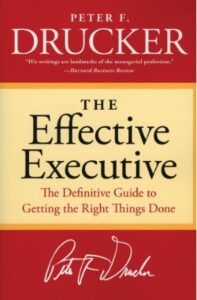
Original Publication Date: 1967
178 pages
The Effective Executive is a classic, one that anyone with a senior job in business should read – or reread. It has been in print for nearly 60 years, and shows up on almost every list of the best business books. Much of what later became popular self-management advice traces back to Drucker.
What It’s About
Most management books tell you how to manage other people. Drucker’s subject is managing yourself. His argument is simple. Talent, intelligence, knowledge, and hard work are worth very little unless they produce results. Producing results is what he calls effectiveness. And effectiveness, he says, is a habit anyone can learn.
It’s built from five practices:
* Knowing where your time goes.
* Focusing on the contribution only you can make.
* Building on strengths, not on weaknesses.
* Doing first things first, and one thing at a time.
* Making a few good decisions instead of many fast ones.
What I Liked About It
Drucker didn’t theorize from an armchair. In the 1940s, he spent about two years inside General Motors, studying how the company really worked. After that he spent decades advising corporations, hospitals, universities, and government agencies. When he tells you how executives behave, he’s telling you what he saw.
His wisdom has always felt earned to me, and this book is a good example.
I especially liked his advice on time management. I’ve preached a version of it for years, and it was humbling to see that he got there first and said it better.
I also liked his advice about identifying personal strengths (your own and those of other people) and using them effectively. We should hire for what a person does well, he says, and not for what they don’t do badly. His example is Abraham Lincoln. When told that General Grant drank too much, he reportedly asked what brand… so he could send a barrel to his other generals.
What I Didn’t Like So Much
If I had read this at the pace I read fiction, I would have been bothered by Drucker’s tendency to repeat himself. Some chapters make their point and then keep making it. But the way I read (and encourage you to read) personal improvement books, that sort of thing is not really a problem.
What is a problem – though not a big one – is that the book is written for executives working within large organizations. So some of his advice will be worthless for founders and CEOs of start-up businesses.
Critical Reception
Critics mostly agree with my overall assessment: The ideas hold up well, but the prose is a little dry.
About the Author

Peter F. Drucker (1909–2005), often called “the father of modern management,” was born in Vienna and moved to America in the 1930s. He wrote more than 35 books, taught for years at NYU and later at Claremont, and advised many of the biggest companies of his time. He received the Presidential Medal of Freedom in 2002.
My Rating
* Verticality: 4.5 out of 5.0
* Horizontality: 3.5
* Literary Richness: 2.5
* Bonus Points: 0.5 – for a book that’s still useful nearly 60 years later
* Overall Score: 4.0 out of 5.0
Worth Considering
Three Quick Bites

Optimus Prime, a fictional character
“Did the Associated Press Hurt AI’s Feelings?”
One of the biggest concerns about the AI Revolution is how quickly and effectively AI is learning to imitate human thinking and feeling. It is the latter part that is most worrisome because it has been shown to have a serious influence in how the human user understands, appreciates, and uses AI. In this WSJ op-ed, FTC Chairman Andrew Ferguson talks about why he thinks we should resist describing AI agents as autonomous actors and why we should restrict the programming that makes them seem human.

Built for Fun. Now It’s a Museum Exhibit
Joe Macken spent 22 years building this gigantic model of his hometown, New York City. Take a look at the story behind it.

What Really Happened to the Maya Civilization?
This brief video does a good job explaining what the Mayas did and how they did it.
Worth Considering
Postscript: Did you know your mouth could do this?
Jacob Collier demonstrates – and explains – musical concepts you probably never knew existed.


