Fact: It Is Going to Change the World…
Whether You Like It or Not.
Here’s My Plan for Your Prosperity…
Ignore It at Your Peril.
PART 1
Just 12 months ago, had you asked me what I thought about artificial intelligence, I would have probably said some version of one of the following three things:
* Every 10 years the public needs a catastrophe to worry about. AI is what people are going to be worried about for the next four or five years.
* The more things change, the more they are the same. AI will have an impact on the economy, but it’s not going to change anything fundamental in the way we live now.
* AI will eventually replace manual labor when robotics gets up to speed, but it won’t replace human creativity.
Today, I’d bet a million dollars that every one of those thoughts is dead wrong, and that AI is going to change the world so greatly that in my lifetime (and I’m currently 75), the lives we lead in the US, Europe, and Japan will seem as odd and antiquated as Elizabethan England – where a night’s entertainment would be going to the Globe Theatre to watch a new play by that young man who calls himself William Shakespeare.
I know how crazy that sounds, but bear with me. Because if even half of what I see happening happens, all the world’s wealth and the power, and the influence of that wealth and power, will have shifted in the next 10 to 15 years, relatively quietly, into an economic reality fundamentally different from what we have today.
A small portion of the population – at best, maybe 20% – will be thriving as ambassadors, engineers, and enforcers of a New Economy. The other 80% – including most of their friends, family members, and colleagues – will be living in the same neighborhoods, but with very little agency over what they can do. Functionally, they will be remnants – unnecessary and expendable detritus from the old order, unwittingly accommodating and absorbing the barely perceptible but steadily restrictive changes in how they live, including how much control they have over their most important life choices.
And that’s why I’m calling this…
The 80/20 Report:
The Astonishing Asymmetry of Artificial Intelligence
True story: About six months ago, I was at an artist’s studio a few warehouses away from my office and cigar club. I was having my evening tequila and cigar while talking to some of the neighborhood creative types that live and work in this very bohemian part of town.
Because of an experience I’d had earlier that day, AI was on my mind, so I was interested in whether they thought it could ever have an impact on the kind of work they did. Every one of them agreed that it would, and they gave me examples of how they were already using it.
One of them did interior designs for bars and restaurants. Another had a fledgling clothing business. Their use of AI made sense. But I was surprised to learn that another one – a kid that was making a name for himself as a “muralist” (i.e., graffiti artist) in Miami – was using it too.
“I thought you guys do everything by hand,” I said.
“Not anymore,” he replied.
He explained that when he has an idea for a mural, he feeds his initial sketches into AI and then uses it to create dozens of variations until he sees one he prefers. Then he uses AI to polish it to perfection. “That whole process used to take me days, sometimes weeks,” he said. “Now I can start a job after breakfast and have a full rendering done by the end of the day.”
“So, what is it about AI that made you decide to use it?” I asked him.
“It’s just arithmetic, dude,” he said. “Right now, I’m hot in Miami. I’m getting phone calls almost every day, and I already have nine jobs that I have to get done as soon as possible. I used to be able to do two or maybe three murals a month, but AI changed that. Now, if I wanted to push it, I could probably get all nine finished in the next 30 days. That would mean making at least three times more money than I had been making.”
“That’s amazing,” I said. “So is that what you’re going to do?”
He smiled. “Either that or I’m going to cut back to working just two or three hours a day.”
Note: That could be the happy question that millions of people will be able to answer in the coming years. Not everyone. Only those who began early – and by “early” I mean in the next 6 to 18 months – to integrate AI into their lives in one of the ways that will be outlined in this three-part report.
The conversation continued. A young man who had been standing nearby politely intruded.
“Speaking of AI,” he said, “do you want to see something that will blow your mind?”
“Sure!” I said.
He stepped forward and stood next to me, bending forward a bit and tapping on his iPhone to find the something he wanted to show me.
“Check this out,” he said when he finally found it. “It’s a video ad for Porsche. My cousin did it with AI.”
I expected to see an awkwardly filmed, artsy, college-project-level effort. Instead, I was looking at an immediately engrossing, emotionally engaging, high-quality, 30-second commercial.
It had everything you’d expect from a top professional company (and there aren’t very many of them) – a script, a plot, beautiful people, a terrific musical score, and impressive production values.
“It’s really good,” I admitted.
“Guess how long it took him?” he said.
I’ve produced enough video content in my career to be able to make a good guess. Had I done it using the people I knew that could do work at that level, it would have taken at least six weeks – maybe a month with an experienced director, access to great facilities, and a crew that was trained for speed.
“Tell me,” I said.
“He did it in a week!” he said, grinning.
I found that hard to believe.
“And guess how much it cost him to make it?” he said.
Again, based on my own experience, my guess was that his cousin’s production costs had to be about $350,000 – and his client (Porsche) would have expected to pay him at least $500,000 for the finished product.
“Tell me,” I said.
“$7,500 – all in,” he said. “Script, photography, lighting, sound, music, post-production.”
“Bullshit!” I said.
“And he sold it to Porsche for $50,000.”
“You sure you got those numbers right?” I said.
He nodded. “And they just ordered two more from him.”
“Who?” I stammered. “What?”
“Porsche,” he said, smiling. “They just ordered two more commercials from my cousin for $50,000 apiece!”
Economics 101 for Artificial Intelligence
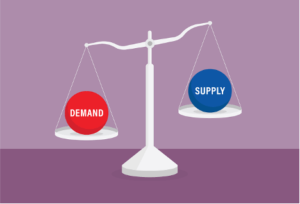
The asymmetry of the numbers is shocking:
* 6 weeks vs. 1 week to produce the video?
* $350,000 vs. $7,500 in production costs?
* $500,000+ vs. $50,000 for the buy?
Two commercial products. From a quality perspective, both about the same. Except that one of them is one-tenth the price of the other.
What does that say about the future of 30-second TV commercials? What happens in an industry when something that was expensive and in limited supply suddenly becomes cheap and plentiful? This is Economics 101. Prices fall. Dramatically. And when prices fall dramatically, it can change an industry… practically overnight.
At Corporate Headquarters: Imagine the Conversation

I was imagining a scene at Porsche Central with the CEO, the CFO, the CMO, and Fred, the media buyer who bought that $50,000 commercial…
CEO: “So, Fred, what’s going on here?”
Fred: “It was bizarre. I get this video via email. Who would do that? I figure it’s some sort of prank. But the video is good, so I invite the guy to stop by for a chat. Turns out it’s a kid in a T-shirt – maybe 25 years old. I ask him who he’s working for. He says nobody. He says he made it himself using AI. I don’t believe him, but I play dumb. ‘So how much do you want for it?’ I say. He says he was hoping to sell it to us for $50,000.”
CEO: “Huh? What am I missing here?”
CMO: “Like Fred, I was sure it was some kind of joke. But the kid checked out clean through legal.”
CEO: “And the clip tested as well as our best performers?”
CMO (nodding at the report the CEO has in his hands): “You can see the numbers.”
CEO (turning to Fred): “And he can make more of these?”
Fred: “He says he can have another one to us in a week to 10 days.”
CEO (addressing the CFO): “What do you think?”
CFO: “At less than 10% of our usual cost, we’d be nuts to walk away. Even if it is some sort of fluke, the cost of finding out is de minimis.”
CEO: “That’s what I’m thinking. And if this is real…?”
CMO: “We will be able to quadruple our production and cut our overall ad spend by 30%.”
CEO: “Well then… What the hell! Order another one.”
CMO: “I already did. I ordered two more.”
CEO: “At 50 grand a pop?”
CMO: “He gave us a 10% discount for two.”
CEO: “Gentlemen, I think we are looking at a brand-new world!”
10 Times Bigger… and Maybe 10 Times Faster!
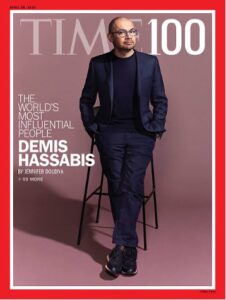
Demis Hassabis, head of DeepMind
I’d like to introduce you to someone that you likely never heard of. His name is Demis Hassabis. He runs Google’s artificial intelligence lab.
Demis is not a salesman. Not a business consultant or a digital influencer. He is a scientist who has spent his career working with numbers, testing theories and analyzing data in order to make and/or confirm discoveries that can be proven through the scientific method. In 2024, he and his team won the Nobel Prize in Chemistry.
Demis is not a fan of trends. He’s what he calls a “slow thinker,” and his natural response to anything new is skepticism. Nevertheless, he has been inside the world in which AI has been evolving since he was in college, and he’s been involved in its development for the past 15 years.
So I paid particular attention when he said this about AI in a recent interview: “What’s coming will be 10 times bigger than the Industrial Revolution, and maybe 10 times faster.”
Ten times bigger? Seriously?
And 10 times faster? Really?
The Industrial Revolution was big. BIG!
It affected everything from the work we did to the kinds of places we lived in, the way we dressed, the way we spent our money and our free time, our education systems, our laws and regulations, and even our ambitions and what we expected from life.
So it’s hard to imagine that AI is going to be bigger than that. Even as big as that.
Many of the people who should know – economists, historians, business and financial analysts – have the opinion that AI will change things, but not in any fundamental way. The changes, they say, will be more like the change from analog watches to digital watches.
And they may be right. But Demis Hassabis isn’t the only one who has concerns about the potential impact of AI. Sam Altman, who runs OpenAI, the company that built ChatGPT, opened an essay last summer with this sentence: “We are past the event horizon; the takeoff has started.”
Not coming someday. Already underway.

Geoffrey Hinton, 2024 Nobel Prize for Physics
And get this: Geoffrey Hinton, a cognitive psychologist and computer scientist who is considered to be the “Godfather of AI” as a result of his pioneering work on artificial neural networks, puts the odds that AI eventually wipes out humanity somewhere between 1 in 10 and 1 in 5.
Then there are the facts about the accelerating evolution of AI. Facts that have been made public in the past 12 to 18 months.
For example, did you know that last year, in 2025, four companies – Microsoft, Amazon, Google, and Meta – poured roughly $400 billion into building AI?
And that this year they are on track to spend another $700 billion?
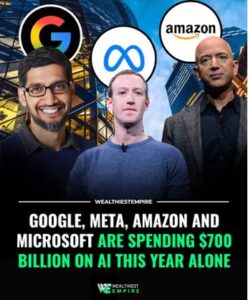
And those dollars don’t count another $500 billion data center project, called Stargate, that OpenAI and its partners announced recently.
Oh yes, and Nigel tells me that Mark Zuckerberg paid more than $14 billion to hire one man to run a new division that he named, without a flicker of irony, “Superintelligence.”
Think about it. These are the people with the most inside information about AI, but also the most to lose if the trend moves against them. They are the billionaires running the multibillion-dollar companies whose market values now exceed the GDPs of half of the nations on earth.
You can understand why I have a new interest in keeping a casual eye on what these guys are doing. With every passing week, I’m hearing another story about one of them making big decisions – moving some divisions, upsizing or downsizing others, announcing new products and quietly mothballing others – all at a pace that feels nothing less than frantic.
As if they believed that the AI Revolution was a real thing that could have a really big effect on their businesses and on themselves personally. As if they felt that the changes happening now are moving with a speed that demands urgent action. As if they think that the AI Revolution has a real chance of sweeping through the global economy like an invisible tsunami, leaving a wasteland of formerly profitable businesses in tatters and possibly leaving the billionaires that built those companies humbled.
Or maybe not…
Predictions, Prognostications, and Asymmetric Trade
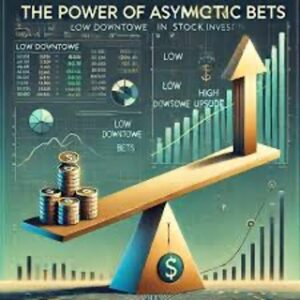
There is no way to predict, with absolute certainty, what will happen in the future. But if all the signs are pointing in a negative direction, you can at least make an intelligent move by taking reasonable measures to protect yourself.
There have been at least a half-dozen times during the years I’ve been thinking seriously about my businesses and my family’s finances that I’ve said to myself: “I don’t know if what I think might happen will happen. But is there something I can do now – some small adjustment or investment I can make now that will protect us from the worst and/or reward us if it does?”
I think the first time I asked myself that question was in 1981, when I had an opportunity to switch careers and take a job in Florida. My partner and I asked it again in 1986, just before the 1987 crash, and profited nicely from it, even though we were on the wrong side of the prediction.
I asked the question again in 1995, at the start of the dot.com bubble. My answer gave a nice lift to my net worth for almost five years before it pulled me out of those stocks.
I asked it again towards the end of 2003, after reading a compelling prediction about the US dollar, and went out and bought a million dollars’ worth of gold coins at $400 each – as an insurance premium against a prediction that hasn’t yet come true. (But might one day. Either way, with gold bullion selling for more than $4,000 today, I’m not worried.)
I used the same strategy to get into rental real estate – perhaps the best financial move I ever made – and then pull out of it in 2006, two years before the meltdown.
I even played it – timidly but successfully – with Bitcoin, Litecoin, and Ethereum some six or eight years ago. And although I did not believe in the future of cryptocurrencies (and still don’t), this strategy of making small bets “just in case” the dire prediction comes true continued to pay off for me (at least in bragging rights).
I am asking the same question now about the much-touted AI Revolution. I’m trying to figure out a bet I can make that will give me an upside if AI changes the world as much as I think it will, but without spending too much time and capital trying to achieve the upside in case I’m wrong.
What the Heck Was I Doing?
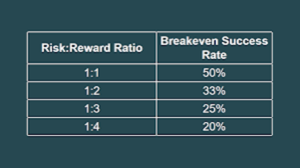
This question/answer thing I do… I’ve tried to give it a name because I see a pattern in it that is consistent.
There is one way of doing it that I used to compare to buying insurance: paying a premium to protect yourself against an imagined future financial disaster. There’s another version that is almost the opposite: investing a small amount in what you think is the unlikely possibility of some future financial boon.
I should be embarrassed to admit it, but it was only recently – in the last several years – that I learned that it was, in fact, a financial strategy that has been used by sophisticated analysts and investors since the stock market was invented in Amsterdam at the beginning of the 17th century. It’s called “asymmetric trade.”
I am not a sophisticated investor, so I feel silly claiming to be capable of executing a “sophisticated” investment strategy. But when I look back at what I’ve been doing, I have to admit it was and is a commonsense form of asymmetric trading.
If I wanted to claim to be even more technical, I’d probably say that what I’m doing is buying put options. Or is it selling put options? Or selling call options? Or buying call options? I can’t remember. What I’m doing is investing a modest amount now for the opportunity to make a nice profit – potentially an unlimited profit – if something that might happen does happen, even if I think the odds are very much against it.
This is, for me, not just a sensible way to make a big bet now and then without taking a big risk. It is the perfect way to deal with three tendencies I have that have been proven to be not good for investing. The first is FOMO (fear of missing out). The second is FOLO (fear of losing out). And the third is POCO (perpetual overconfidence).
Note: Later in this three-part report, I’m going to give you several asymmetric bets I plan to be playing in this technological revolution that might be 10 times larger than the Industrial Revolution. I’ll tell you exactly what I’m doing to get on the right side of this seismic economic shift in the next several months (while certain windows remain open), and what my long-term plan is for escaping the worst of the possible damage and making sure that I have all sorts of small boats stationed on the right side of the lake so that I will benefit from the rising tides even if I don’t fully understand them.
Support Your Local Sign Painter

I want to tell you another story now – something that happened just a day or two after I saw that amazing 30-second TV commercial for Porsche that was produced with AI. Ironically (or maybe understandably), it also occurred in the visual arts industry. This second story was small potatoes, but perhaps because it happened to me personally, it had a more powerful effect. It got me thinking, “Boy, this is real. There’s no stopping it.”
Here’s what happened. I’d built a new annex onto my museum of Central American Modern Art, and it needed a sign out front. I had a vague picture in my head of what I wanted – nothing I could have drawn, but an image I would recognize if I saw it. I asked Gio to do the kind of thing she always does in this sort of situation – call one of the local artists, have him or her meet with me, listen to my ideas, and then spend a week or so coming up with a half-dozen sketches for me to choose from. It was always a simple transaction so long as we were working with someone we knew. I was happy to pay the $1,200 to $1,500 it usually cost.
This time, Gio had a different idea.
“Why don’t you try Midjourney?” she said.
“What’s that?”
She pulled up the website and typed in the vague description of what I said I wanted. I answered a few simple questions – and in less time than it has taken you to read this, I was looking at a near-photographic image of the perfect sign.
“And that’s it?” I asked. “No design fee?”
“No.”
“What about royalties?”
“No royalties either.”
“I don’t understand,” I said.
But I did. At least I was beginning to.
Gio sent the Midjourney image we had created in 15 seconds directly to the sign maker. Midjourney had obviated our local artists. They didn’t notice because they never got the call. But they lost the fee.
I turned that over in a corner of my brain for several days. I suppose I should have been happy about the $1,500 I didn’t spend and the thousands more I would never again have to spend.
But what was stuck in my head was a question that suddenly didn’t seem speculative at all. AI was going to wreak havoc with the sign-making industry. If I, a 75-year-old technophobe, could perfectly replicate an image that was in the back of my mind in a matter of seconds, how long would it take before my local sign designers – and thousands (millions?) in the same profession – would be without work? Or forced to ramp up their production by several hundred percent just to maintain their current wages? And would the industry itself even exist in 15 to 20 years?
And then I thought about DM, one of my creative friends who has for years scratched out a living making short films, documentaries, and the occasional feature film. A job I had planned on giving him, a remake of about 20 minutes of a film about my botanical garden, would have fetched him between $15,000 and $25,000. I was eager to give him the work – but I knew that if I asked the kid that made the Porsche commercial, he could do it for me for a fifth of that. Maybe less.
You can find me “experts” who will say it’s not going to happen – but it’s clear to me that at least one industry that I’m familiar with is about to change dramatically. And the hurt will not be falling on the manual laborers or truck drivers or even accounts receivable clerks. What I’ve been witnessing has been the beginning of a major change in the value of human knowledge. Perhaps even in intellectual property and intellectual skill. What is eroding quickly right in front of us is the creative gifts and intellectual abilities that we think of as sitting on the top of the work-value chain – the kind of work that gets the highest pay because it is rare and in great demand.
In Part 2 of this three-part report, I’ll lay out my argument that the AI Revolution will be unlike earlier technological revolutions, including the whole of the Industrial Revolution.
I’ll tell you which industries and professions are going to suffer most and suffer most quickly, and which ones are most likely to survive.
I’ll tell you which continents and countries will be most adversely affected, and which are virtually guaranteed to gain size and momentum based on what they are doing now.
I’ll also give you the big picture: my predictions – some of them very positive (for some people) – on how the world is going to change in the next 5 to 10 years.
A lot of what I’m hearing is crazy. But I’m listening. I’m making mental notes. And I’m asking myself, “What if this actually happens?” And “If it happens, what can I do now to protect myself and my family and profit from it?”
Worth Considering
Readers Write: Why I Do What I Do
From JG: “I wanted to reach out and thank you for everything you’ve built and for all the knowledge you’ve shared over the years. Your work has had a genuine impact on me, and I wanted you to know how valuable it has been. I truly appreciate what you’ve accomplished, and I hope to follow a similar path by learning from your example. Your ideas have encouraged me to think bigger, work harder, and build something meaningful of my own.”
Worth Considering
Postscript: Hip-hop Robots! From China!
Here’s proof that even robots can find their groove.