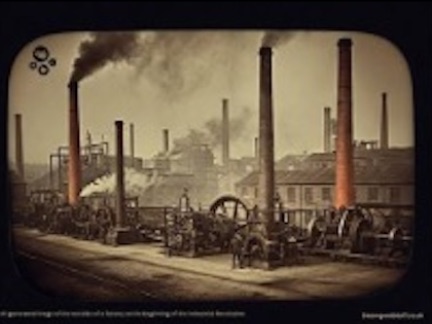
For the last 250 years, every important new technology – and the machines built to support it – has increased the value of human knowledge and human thinking.
The plow, the steam engine, the power loom, the sewing machine, the assembly line, and the computer all took some muscle work or drudgery off a human being’s back and, in the bargain, gave the thinking human the opportunity to accomplish more in the same amount of time – which meant the potential to create more wealth.
The farmer with two acres could farm 20. The horseman’s son became a locomotive engineer. The tailor’s son became a manager of tailors. Blacksmiths became machinists. Machinists became engineers.
For more than two centuries, every important technological innovation increased the demand for higher-level skills, which meant higher wages. Professions that had once been one-man jobs became small companies and then large businesses that needed designers, planners, managers, and repairmen – jobs that required new knowledge and new knowledge-based skills.
For millions of entrepreneurs living through that extraordinary period, investing in knowledge – technical education, professional expertise, specialized skills – was about the safest investment imaginable. And for 10 generations, the people who invested most heavily in the Industrial Revolution generally enjoyed the greatest rewards.
I’ve watched this happen throughout my own lifetime.
Television. Microprocessors. Personal computers. Smartphones. Fiber optics. The internet itself. Medical imaging. Gene editing.
Each important breakthrough created industries that had never existed. Each one produced jobs nobody had imagined. And the economic pie kept getting bigger.
That is exactly what many of my friends and colleagues believe will happen with artificial intelligence.
I’m not so sure. And for one very simple reason: AI is not increasing the value of human knowledge and human thinking. It is decreasing it.
That does not necessarily spell doom. As I’ll explain in Part 3 of this report, I’m actually optimistic about AI’s long-term effect on civilization. In many perfectly logical ways, it has the potential to transform the global economy – perhaps even our culture – into something remarkably better than what we have today.
For now, I want to explain why I believe this technological revolution is fundamentally different from every major technological revolution of the last 250 years (with one possible exception: the Agricultural Revolution).
The Fundamental Economic Principles Do Not Change
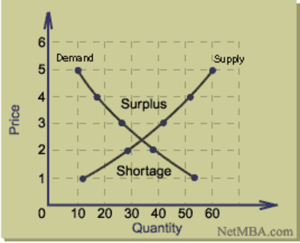
The value of anything – from fertilizer to automobiles to entertainment to purebred dogs – is determined by three things: utility, scarcity, and perceived value.
You could simplify that into supply and demand. (Perceived value is part of demand.)
In the Age of AI, knowledge will remain useful. Given the right marketing, it may even retain high perceived value.
But it will no longer be scarce.
On the contrary, the supply of knowledge – and of knowledge-based skills – is about to expand enormously. And the kinds of knowledge that have been most valuable for centuries – human knowledge and human intelligence – will increasingly compete with knowledge generated by digital machines.
Notice that I’m not saying knowledge will stop mattering. Far from it. Knowledge will remain indispensable. What is changing is its scarcity. And whenever something becomes less scarce, its economic value declines.
Knowledge has become more valuable in every previous technological revolution because each new machine increased the productivity of the human mind. Artificial intelligence is the first major technology that does the opposite. Instead of making human cognition more valuable, it competes directly with it.
That is why so many people are underestimating what is about to happen. They’re reasoning by analogy. They’ve seen this movie before. Steam replaced muscle. Electricity replaced drudgery. Computers replaced paperwork. The internet replaced distance.
Every one of those revolutions created a temporary disruption, but eventually produced more jobs, more wealth, and a higher standard of living. This has happened not once or twice, but repeatedly. One can understand why they assume the AI Revolution will follow the same script.
It may not. Because this time the machine is replacing the very thing that created the new jobs during all the previous revolutions. It is replacing cognition.
That doesn’t mean humanity becomes poorer. It doesn’t mean civilization collapses. It doesn’t even mean AI is ultimately bad for mankind.
It simply means that the people whose economic value depends primarily on selling their knowledge and their ability to think analytically may find themselves competing against a machine that possesses more knowledge than they have, analytical skills as good as or better than theirs, and, most importantly, can deliver all of that almost instantly at virtually no cost.
When I first began thinking seriously about this, I found myself asking, “If knowledge becomes almost free… what happens to the people who make a living by selling knowledge?” Lawyers? Accountants? Consultants? Engineers? Architects? Financial analysts? Programmers? Designers? Teachers? Writers? Marketers? Doctors?
Maybe not all of them. And probably not immediately. But enough of them to change the economics of entire professions.
Once I looked at it that way, dozens of seemingly unrelated news stories suddenly began fitting together. The layoffs… the hiring freezes… the growing insistence by CEOs that employees learn to use AI.
None of those stories, taken by themselves, prove anything. But taken together, they begin to point in the same direction.
Three things make me believe this time really is different.
1. AI replaces cognition, not labor.
For more than 250 years, every major technological revolution made human abilities more valuable. The steam engine multiplied muscle. Electricity multiplied production. The computer multiplied calculation. Each breakthrough gave the thinking worker more leverage. But AI is the first general-purpose technology designed to perform many of the cognitive tasks that educated people have always been paid to do. It doesn’t simply help the lawyer draft a contract. It drafts the contract. It doesn’t merely help the programmer write code. It writes the code. It doesn’t just assist the graphic designer or marketing copywriter. Increasingly, it does their work.
That reverses the bargain that has enriched educated workers for generations. For the first time since the Industrial Revolution, the technology itself is becoming the intellectual worker. That doesn’t mean human intelligence becomes worthless. Far from it. The people who learn to direct AI may become dramatically more productive than ever before. But millions of people whose livelihoods depend on selling routine cognitive work will suddenly find themselves competing against software that is faster, cheaper, available 24 hours a day – and improving every month.
2. AI improves itself at an exponential rate.
Most people imagine technological progress as a straight line. It almost never is. Steam engines became more efficient over decades. Electricity spread city by city. Computers became faster year after year. AI is advancing on a completely different curve.
The amount of computing power devoted to training frontier AI systems has been doubling roughly every six months for years. At the same time, researchers continue discovering better algorithms, better architectures, better training methods, and better ways for models to reason.
Those advances compound. Each generation helps create the next. The result is a feedback loop unlike anything we’ve seen before. That’s why predictions that sounded outrageous 18 months ago now seem conservative. It’s also why people consistently underestimate what’s coming.
Human beings are surprisingly good at understanding linear change. We’re terrible at intuitively grasping exponential change. If something doubles once, it doesn’t seem remarkable. If it doubles again, it gets interesting. Keep doubling long enough, though, and what looked like a curiosity suddenly becomes the dominant force in an industry.
That’s where I believe we are today.
In a moment, I’ll show you the arithmetic. Once you see it, the timeline I’ve been arguing for becomes much easier to understand.
3. AI costs almost nothing to deploy.
Every industrial revolution demanded an enormous physical investment. Factories. Railroads. Power grids. Oil fields. Assembly plants. Building them required governments and banks, decades and billions of dollars. But with AI, once the frontier models exist, the cost of putting them to work is astonishingly small.
The barrier to entry has collapsed. That is wonderful news for entrepreneurs. It is terrifying news for businesses whose competitive advantage depended on expensive human labor.
Put those three realities together…
A technology that performs cognitive work. A technology that improves exponentially. A technology that can be deployed almost instantly, almost everywhere, at almost no cost. That’s why I believe this revolution won’t unfold over generations. It will unfold over years.
With the AI Revolution, there is no longer a plethora of high-level, knowledge-based occupations needed to design, maintain, and repair AI systems, because they are designed to redesign, maintain, and repair themselves.
At the moment, during this early but rapid transition from AI being employed sparsely to nearly universally, there is still a need for people that understand code and are skillful at giving prompts to LLMs (Large Language Models). But that is quickly disappearing. In another six to 12 months, all an AI user will need to do to acquire almost the entirety of what humankind currently knows is to speak into a microphone.
For the first time since the beginning of the Industrial Revolution – arguably for the first time since mankind stopped hunting and gathering – we have created a machine that doesn’t replace the muscle at the bottom of the economic ladder. It replaces the knowledge at the top.
Previous technologies created new professions because every new machine required armies of people to design it, build it, operate it, maintain it, repair it, improve it, sell it, finance it, and manage it.
But with AI, the machines are increasingly helping to design themselves. They help write their own code. They diagnose their own errors. They optimize their own performance. And every new generation becomes better at creating the next one.
That doesn’t mean programmers and engineers disappear. But it does mean that we’ll need far fewer of them than we would have needed under any previous technological revolution.
Even prompting – the skill everyone is rushing to master today – already feels temporary. Though there is still value in knowing how to coax better answers out of LLMs, every new generation becomes dramatically easier to use. The machine increasingly understands ordinary speech instead of requiring carefully engineered prompts.
That trend seems obvious: Eventually the most valuable skill won’t be writing clever prompts. It will be asking intelligent questions.
Or perhaps it will be something even simpler: recognizing your own ignorance. The person that says “I don’t know how to solve this,” and can clearly explain the problem, may soon have access to nearly all of humanity’s accumulated knowledge in seconds.
For the first time in history, the economic ladder itself is being rebuilt.
For more than two centuries, workers escaped automation by climbing upward – from muscle to skill, from skill to knowledge, from knowledge to judgment. Every wave of technology flooded the lower rungs while leaving the upper rungs drier, safer, and more valuable.
AI climbs that ladder with us.
That is why I find it so surprising that many of the people who should be the most concerned seem the least concerned. The credentialed. The highly educated. The experts. The people whose incomes depend almost entirely on what they know.
Many of them seem convinced AI will spend decades replacing truck drivers, warehouse workers, and assembly-line employees before it ever threatens lawyers, accountants, architects, consultants, physicians, engineers, marketers, or financial analysts.
They’ve lived through every previous technological revolution. So have I.
Their intuition has been rewarded for decades. Mine has too.
But intuition is nothing more than memory applied to the present. And memory sometimes becomes a trap.
I know many people who tell me, almost cheerfully, “AI will never do what we do. It’ll simply make us better at doing it. All of us will be fine.”
Some of them are friends. Some are colleagues. Some are members of my book club.
I hope they’re right. I really do. Because many of them have devoted decades to mastering difficult professional skills. But as I suggested in Part 1 of this report, I think only a small portion of the population will be “fine.”
Perhaps 20% will become dramatically more valuable by learning to evolve with AI. The remaining 80% won’t disappear, but I think many of them will discover that the market no longer values their knowledge the way it once did.
That’s the distinction I want you to keep in mind.
I’m not predicting mass unemployment. I’m predicting massive deflation in the market value of ordinary cognitive work.
“We’ve seen this movie before.”

Since arriving at this thesis a few weeks ago, I’ve tested it against some of the smartest, most technologically sophisticated people I know.
I wasn’t looking for agreement. I was looking for reasons I might be wrong.
And almost every conversation began the same way: “We’ve seen this movie before.”
Every technology destroys some jobs, they say. Every technology creates new ones. The loom destroyed weaving jobs but created factories. The automobile destroyed carriage makers but created Detroit. The computer was supposed to create permanent unemployment. Instead it created software companies, semiconductor companies, internet companies, cybersecurity firms, and occupations nobody could even have imagined 50 years ago. So why should AI be any different?
It’s an excellent argument. (In fact, it was my own argument for years.) And because it has been correct for more than two centuries, it deserves to be taken seriously.
But I believe its conclusion depends entirely on one assumption – that AI behaves like every previous technology. And if that assumption is wrong… the conclusion may be wrong too.
So instead of simply dismissing it, let’s examine it.
Knowledge is knowledge…
Whether it belongs to a muralist or a surgeon
In Part 1 of this report, I showed you the creative trades going first. The sign painter. The videographer. The young man who created a national Porsche commercial in a week using software that barely existed a year earlier.
It’s tempting to dismiss those examples because they’re examples of “creative work,” which has always been subjective. That misses the point. The machine doesn’t care whether the knowledge it’s replacing belongs to an artist or a scientist.
Knowledge is knowledge. Whether it’s knowing how to paint a mural… diagnose pneumonia… draft a contract… interpret an MRI… or analyze a balance sheet. If it can be learned, it can be modeled. If it can be modeled, it can increasingly be performed by software. And once that happens, the economics begin to change. Not overnight. But inevitably.
Ask almost anyone to name the highest-paid professions in America and you’ll hear roughly the same ones. Cardiologists. Anesthesiologists. Surgeons. Radiologists. Corporate CEOs. Commercial airline pilots. Psychiatrists.
These occupations sit near the summit of today’s knowledge economy. Parents dream that their children will someday join their ranks because they’ve represented something close to lifetime economic security. Years of education. Years of experience. Years of accumulated judgment. All protected by scarcity.
But their scarcity is exactly what’s beginning to disappear.
A Prediction That Makes Even Me Uncomfortable
Here’s the endangered profession that surprises almost everyone when I mention it: psychiatry.
Most people assume mental-health professionals will be among the safest occupations because their work is so deeply human. I suspect the opposite may prove true.
Think about what much of modern psychotherapy actually involves. Long conversations. Pattern recognition. Memory. Questions. Empathy. Availability.
Now imagine a system that is infinitely patient. Never distracted. Never judgmental. Available at three o’clock in the morning. Able to remember every previous conversation perfectly. Able to draw upon the entire published literature in the field before answering. And available for a tiny fraction of today’s cost.
I’m not saying AI will replace every psychiatrist. But I am saying the economics become difficult to ignore.
This is why I keep coming back to the same thought…
For at least 250 years we’ve told every ambitious young person essentially the same story. Study hard. Acquire knowledge. Develop valuable expertise. Your education will become your greatest economic asset.
For most of modern history, that advice has been exactly right. It may still be right. But not for the same reason.
Knowledge itself may no longer be the scarce resource.
Judgment. Character. Leadership. Originality. Entrepreneurship. Trust. The ability to see problems worth solving before anyone else notices them. Those may become the new scarce assets. And if I’m right… we’re about to experience one of the largest reallocations of economic value in modern history.
I understand why many intelligent people reject this argument. Nine out of 10 people I’ve discussed it with initially thought I was exaggerating. Perhaps you do too. That’s perfectly reasonable.
In truth, I resisted it myself because everything I’ve experienced during my lifetime taught me the opposite. The thing that finally weakened my resistance wasn’t another opinion. It was mathematics. More specifically… the speed at which AI itself is improving.
The King and the Chessboard

There is an ancient story that has been told in many forms over the centuries. Whether it’s true hardly matters. It survives because it teaches something our brains have great difficulty understanding.
A king who loved to play chess wanted to reward the inventor of the game. “Name your prize,” he said to the inventor.
“Rice,” said the inventor. “Pay me with rice. Place one grain of rice on the first square of a chessboard. Two grains on the second. Four on the third. And continue doubling the number of grains until you reach the 64th square.”
The king laughed. He had expected the inventor to ask for gold. Land. Jewels. Instead, the man wanted a little rice.
“Done,” the king said.
A chessboard and a bag of rice were brought in and the count began. One grain of rice was placed on the first square. Two grains on the second. Then four. Eight. Sixteen. Thirty-two.
By the 10th square, the inventor had 1,023 grains – little more than a handful. By the 20th square, he had a few pounds of rice.
The king congratulated himself on having made one of the best bargains in history… until they got halfway through the board.
Every square now doubled numbers that had already become enormous. By the time they reached the 64th square, it was clear that the king would owe the inventor more rice than had been produced in the history of the world.
The lesson, of course, has nothing to do with rice.
The point is that human beings are remarkably good at understanding straight lines. If something grows by, say, 10% every year, we have a pretty good feel for where it will end up. But for most of the journey, the exponential growth of doubling disguises itself as something ordinary. Then, almost without warning, it becomes explosive.
Looking backward, the explosion seems inevitable. Looking forward, almost nobody could have predicted it.
That’s why so many technological revolutions appear to happen “all at once.”
Beyond Moore’s Law

In 1965, Gordon Moore, one of Intel’s founders, noticed that the number of transistors engineers could fit on a computer chip had been doubling roughly every two years. He predicted that trend would continue. Almost unbelievably… it did.
The first commercial microprocessor, introduced in 1971, contained about 2,300 transistors. Today’s most advanced AI chips contain well over 200 billion. That’s not twice as many. Or 10 times. Or even 1,000 times. It’s nearly 100 million times as many transistors on a single chip.
Think about that for a moment.
The smartphone in your pocket possesses vastly more computing power than entire buildings filled with computers did when many of us were young. That didn’t happen because engineers suddenly became geniuses. It happened because exponential growth quietly compounded for 60 years.
But AI isn’t merely riding Moore’s Law anymore. It’s accelerating beyond it!
At Moore’s pace, AI would get 1,000 times more powerful in about 20 years. But by doubling every six months, it has gotten 1,000 times more powerful in about five years. That is how a century of change folds into a decade.
And that is why all the super brainy, mostly geeky AI aficionados I know – including the kids that are building the technology as I write this – are talking about major, irreversible changes beginning to take place. Not in three to five years. In 6 to 18 months!
So here’s the question: If these systems continue improving at anything close to their recent pace – if they become better every year at writing… coding… diagnosing… designing… teaching… negotiating… researching… and advising – what happens to the market value of the people who currently earn their living doing those things?
Not what happens to their dignity. Not what happens to their intelligence. Not even what happens to their jobs. What happens to the price the market is willing to pay for their skills? Because, once you frame the question that way, the problem with the “We’ve seen this movie before” argument became difficult to escape.
Even if AI stopped improving tomorrow – which I don’t believe it will – the economic disruption would still be enormous.
Why? Because most of the economy hasn’t adopted the tools that already exist.
Electricity existed long before factories were redesigned around it. The internet existed long before businesses reorganized themselves to exploit it. Smartphones existed before they transformed daily life. And the same pattern is unfolding with AI.
The tools available today are already capable of replacing or augmenting enormous amounts of cognitive work. The fact that relatively few organizations have fully reorganized around them doesn’t reduce their importance. It simply delays the visible consequences. And history suggests those delays don’t last forever.
The layoffs have already started.
Look who’s getting cut!
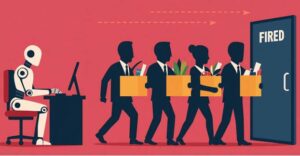
During the past year, one company after another announced layoffs – not among factory workers or warehouse employees, but among highly educated knowledge workers. Some companies openly attributed the reductions to AI. Others spoke more cautiously about “efficiency,” “organizational restructuring,” or “changing business priorities.”
Corporate executives have always preferred euphemisms. The effect on payroll is the same. One of the clearest examples came from Microsoft. The company announced thousands of layoffs while simultaneously increasing its investment in artificial intelligence by tens of billions of dollars. Around the same time, executives acknowledged that AI was already writing a meaningful percentage of the company’s software code.
Those two announcements may have been unrelated. Or they may not have been. Either way, they deserve to be considered together. Amazon reduced layers of management while accelerating its own AI initiatives. Meta continued restructuring while pouring enormous resources into building AI infrastructure. Google, Salesforce, IBM, and other technology companies have all described AI as central to their future strategy while simultaneously reducing headcount in parts of their organizations.
I’m not claiming every layoff was caused by AI. That would be impossible to prove. Businesses reduce staff for many reasons. Economic slowdowns. Overexpansion. Changing markets. Poor management. But when dozens of companies begin investing unprecedented sums in technology specifically designed to automate cognitive work… while also employing fewer people to perform cognitive work… it’s difficult not to notice the direction of travel.
The legal profession offers another look at what’s happening. Tasks that once consumed hours of expensive associate time can now be completed in minutes. Contract review. Legal research. First drafts. Document summarization. None of this eliminates the need for experienced attorneys. But it does reduce the number of junior attorneys required to produce the same amount of work. That has consequences. Perhaps not today. Certainly not everywhere. But eventually.
Every profession depends on bringing young people into the pipeline. If firms hire fewer beginners, there are fewer experts 10 years later. That’s how entire professions gradually change.
The same pattern is beginning to appear in consulting. In accounting. In marketing. In software development. Even in journalism. The first question managers increasingly ask is no longer “How many more people do we need?” It’s becoming “How much of this can AI do?”
By the way, none of the examples I’ve given require artificial general intelligence. None require conscious machines. None require robots that think like human beings. They require only software that performs enough useful work to make hiring one less employee financially attractive.
Businesses make those calculations every day. Always have. If AI saves one employee… it gets adopted. If it saves 10… it spreads faster. If it saves 1,000… it becomes an industry standard.
The economics don’t wait for the technology to become perfect. They never have.
Why This Matters More Than the Layoffs Themselves
When people imagine technological unemployment, they picture entire professions disappearing overnight. History rarely works that way. The automobile didn’t eliminate every horse on Monday morning. Television didn’t close every movie theater in a month. The internet didn’t bankrupt every newspaper in a year.
The transition begins quietly. One fewer hire. One smaller department. One project completed with six people instead of 12. Then another. And another.
Eventually everyone notices. But by then, the trend has been underway for years. I suspect that’s where we are today.
Ironically, the layoffs aren’t the most important development. The important development is the expectation behind them. Executives increasingly believe AI will become more capable next year than it is today.
That belief changes investment decisions. Hiring decisions. Training decisions. Capital allocation. Even if they’re only partially right, companies begin reorganizing around that expectation.
And once enough companies do that… the economy itself begins to reorganize. Not because governments ordered it. Not because economists predicted it. But because millions of individual business decisions all start pointing in the same direction.
That’s how revolutions actually happen. Quietly at first. Then suddenly.
And that brings us to Part 3 of this report – which may be the closest to writing science fiction that I will have the pleasure of doing in my life.
I’m looking forward to it.
Social Issues
Three Quick Bites
* A brief history of science fiction with cartoons… a genre that is as worried about the future as you are.
* She returned her dad’s $180K tractor. Nobody understood why.
* A good reason to give your children chores.
Social Issues
Readers Write: re Part 1 of this “80/20 Report” in the July 22 issue
From JS: “The word ‘velocity’ is probably the most accurate description of the real action taking place…. The rate of change we have measured in our business is a turtle speed compared to what we are seeing with AI…. Calling it ‘hockey stick growth’ does not even begin to capture what is happening.”
Worth Considering
Postscript: Guess!
You know this song, but the orchestra doesn’t. (Hint: It’s all you need.)