

“Nobody is entitled to anything.” For about 30 years, I’ve been saying that to anyone complaining about anything.
It’s one of the most important ideas I ever accepted as true, and one of my longest-standing convictions. I’ve said it in print. I’ve said it to employees. I’ve said to friends. And when they were young, I said it almost every day to my children.
Then my coffee machine broke…
It’s an absurd machine that I bought for absurd reasons, chief among them that I could. It’s plumbed into the water line, so it never needs filling. It holds its own beans and its own milk. You walk into the kitchen half-asleep, push one button, and 30 seconds later you’re holding a cappuccino that would cost $7 in town.
One morning a few years ago, it quit. I was annoyed, which is understandable. But standing there in my bathrobe, I noticed that the annoyance had the wrong shape to it. Somewhere at the back of my skull a small, victimized voice was saying: I shouldn’t have to do this.
Do what? Boil water, pour it over coffee grounds, wait four minutes? Something several billion people do every morning without experiencing it as an injustice, and something I did myself, cheerfully, for most of my adult life.
Then a thought arrived: Hold on! Was that entitlement?
At some point, a small bureaucrat in my head had moved effortless coffee out of the file marked luck and into the file marked mine, where it sat, fully vested, until the morning it wasn’t there and he stamped the whole business UNFAIR.
I laughed about it. I’m still laughing about it. But it left me with a question I that has lingered.
If – after so many years of denouncing the idea of entitlement and criticizing people who believe they (or others) are entitled to this or that – I could feel entitled, even mildly (and I did feel it mildly), could it be because the feeling, the notion, the idea of entitlement is inside all of us?
And if it is inside all of us, could it have evolved in our brains over the millennia? Could it be another vestige of human evolution?
Asking myself that question provoked a flood of unpleasant little memories.
The Old Lady Outside Our LA Hotel

On the sidewalk outside a hotel that K and I stay at when we are in LA, I passed an old woman who just stood there, looking at me and smiling expectantly. I rarely give to street beggars, but there was something about her smile that touched me. I reached into my pocket and pulled out a small wad of cash. It turned out to be a half-dozen $10 bills. Having already made the gesture, I couldn’t put the money back in my pocket, so I peeled off one of them and gave it to her. It was clearly more than the going rate, and she thanked me the way people thank you when they mean it.
The next morning, I had a similar wad of cash in my pocket when I passed her, so she got another $10 bill. It happened again on the third day.
On the fourth day, I reached into my pocket and found nothing there. I searched my other pockets and found three crumpled $1 bills. I smoothed them out and handed them to her.
She looked at what I had offered as if she were in shock. Then she tore the bills in half, neatly and with a certain amount of ceremony, dropped the pieces at my feet, and walked away.
Her reaction surprised me. But as I ruminated on it, I could see why she acted that way. A stranger in business clothes had passed her three times in three days, and each time he gave her a $10 bill. Then, on the fourth day, he decided she was no longer worth 10 dollars. She was getting only three.
The Car Wash Incident
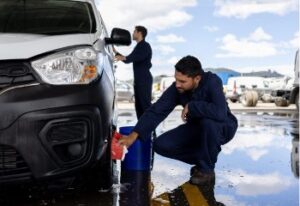
The incident I think about most happened about 15 years ago at a car wash about a mile from my house in Delray Beach.
As the crew was working on washing and waxing my car, I was thinking about my own experience as a car wash jockey on weekends when I was 12 and 13 years old. How I got the job when I was that young, I can’t explain. I applied for it. They accepted me.
You probably don’t know this, but when your car comes out of the machine wash dripping wet and is swarmed by guys frantically wiping it down, each one of them has a specific role to play. Mine was to jump inside the car while it was still rolling, spray the inside of the windows, wipe them squeaky clean, and jump out. Ninety seconds per car.
You can work out how many times I did that during each of my eight-hour shifts. I remember doing the arithmetic at the time, and being horrified.
But so many decades later, that feeling had morphed into sweet and sentimental nostalgia, one that made me feel an overwhelming sense of sympathy and comradery with the three or four guys that were currently drying my car.
When they finished, I gave them $3,000.
I’d like to tell you there was some logic behind it. There wasn’t. I was moved, I had the money, and I handed it over. They were delighted. I was delighted. I drove home feeling like a man who’d done a good thing.
Three months later, I went back. And guess what? They remembered me! Or maybe they remembered the car. They crowded around me, assuring me that they were going to take good care of my “baby.”
Standing there, looking at their joyful faces, I understood what I had done. Nobody said a word about money, but they were feeling like it could happen. And they were feeling like it could happen because of a nearly mindless gesture I had made three months earlier.
Knowing what they were hoping for, I couldn’t very well hand them $40, which had been my usual tip. I gave them $500 – an extraordinary tip at a car wash but, under the circumstances, a huge letdown for them.
They thanked me politely.
I never went back.
The Customer Perk That Backfired

You could reasonably point out that a man who hands out $3,000 at a car wash has only himself to blame for the consequences. Fair enough. So here’s an example of what I’m talking about that I had nothing to do with.
In 2015, Clive Schlee, the CEO of Pret a Manger, a chain of sandwich shops, established an interesting new policy: having employees give occasional freebies (drinks and food) to their customers. Each shop had a weekly quota to work with, and they were told to simply pick people they liked. It wasn’t a loyalty scheme and it wasn’t a marketing promotion. It was a gift, handed out on a whim, and it ran quietly for years.
Then the policy became public knowledge and people began comparing notes, wanting to know “Why did he get one and I didn’t?” And what was intended to be a nice little perk backfired, making even Pret a Manger’s most loyal customers feel alienated and unrewarded when they discovered that they had not been in the chosen group.
That one rearranged my thinking. I’d assumed that the feeling of entitlement required repetition – that you had to be promised and given a thing two or three times before your mind filed it under yours. Apparently not always. And sometimes, it seemed, you don’t have to be given anything at all.
At which point I did what I always do when I’m out of my depth, which is hand the problem to Nigel. (For those who haven’t met him, Nigel is my research assistant, an AI with the manner of a Cambridge man who has come down in the world and is being very decent about it. I give him questions. He brings back citations, and occasionally an expression I can only describe as patient.)
Nigel Weighs In
“Nigel, am I the first person to notice this?”
“Not quite, sir.”
“How not quite?”
“There is a study from 2003, published in Nature, in which capuchin monkeys were trained to hand over a pebble in exchange for a slice of cucumber. They did this happily for some time. The arrangement broke down when a monkey observed its neighbor receiving a grape for the same pebble. Capuchins are fond of grapes.”
“What did it do?”
“It refused to continue. And several of the monkeys threw the cucumber back at the scientist.”
I want to be clear that I’m not comparing anybody to a monkey. I’m telling you that the first thing that came into my head was three $1 bills torn in half on a sidewalk outside a hotel in LA. I asked Nigel whether the study was solid, and he told me, in his way, that it’s been argued about ever since, that another researcher published a rebuttal the following year, and that the results have proved awkward to reproduce. Which is roughly what I’d expect of any finding that convenient.
“Anything before the monkeys?”
“Aristotle devotes a chapter of the Nicomachean Ethics to why benefactors are fonder of the people they help than those people are of them. He compares it to the way a craftsman loves the work of his own hands, and remarks that poets are the worst of all, being as fond of their own poems as of their children. And there is Seneca, sir, who wrote seven books on the subject.”
“Seven books? About giving people things?”
“About the giving, receiving, and returning of benefits. Seneca’s ‘De beneficiis’ – an ethical treatise composed somewhere around the year 60. It begins with Seneca announcing that we do not know how to give or to receive them.”
Twenty centuries ago, a Roman Stoic philosopher looked at this, concluded that human beings are incompetent at both ends of the giving/receiving transaction, and then wrote seven books about it – which suggests he didn’t think one book was going to settle the matter.
I don’t know if much, or any, of this can be attributed to evolution or learned behaviors or whether the monkeys are really up to what we’re up to or why getting $10 three mornings in a row was enough for the woman on the sidewalk and getting a huge tip one Saturday was enough at the car wash and never getting anything at all was enough at Pret a Manger.
What I’ve got now is a question that looks a good deal bigger than it did the morning my coffee machine quit, and a growing suspicion that when we complain about other people’s entitlement we might as well be talking about the weather.
So what I’m going to do is read. Seneca first, all seven books, which I’ve ordered (and which will no doubt take longer to get through than I think it will). Then the anthropologists, who apparently have a great deal to say about societies where sharing isn’t optional. Then whatever the psychologists have worked out about gratitude, which I’ve always filed under manners and am beginning to think is doing a much heavier job than that. Some of what I learn will end up in The Challenge of Charity, the little book I’ve been writing (or not writing) for longer than I care to admit. The rest will turn up here, in pieces, as I go.
In the meantime, let me add this….
The coffee machine was repaired, and for the nine days it was out of commission I got my morning coffee at a little shop down the road. On the fourth morning, the girl behind the counter waved off my money and told me that one was on her.
It surprised me and gave me another thing to think about. Did that sort of kindness emerge from an evolutionary purpose?
Worth Considering
Three Quick Bites
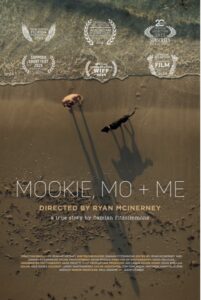
MOOKIE, MO + ME
This is the trailer for a short documentary that Damian Fitzsimmons, my friend and the man that directed Across the Tracks (the feature film I produced about my growing-up years) recently made. I’ve seen it twice. It’s very good, and I think it should win awards. What do you think?

Macklemore performing in Dublin Oct. 28
“My Night at Macklemore’s Free Palestine Tour” by Josh Kaplan
One month after being barred from Gillette Stadium, the rapper drew 13,000 people in Dublin. Josh Kaplan joined the crowd and found fans who justified terrorism and dismissed antisemitism. Read what he said about it here.

“The brutal Harvard class that suddenly everyone wants to take”
A book a week, essays, no devices – 180 applicants for 90 seats. Prof. Louis Menand’s students say they want to be made to read and to think for themselves in the age of AI.
Worth Considering
Postscript: Abby’s Snobby Pet Purse Pigeon
This should be obnoxious. I expected it to be… but the pigeon’s owner is so aware of how silly it sounds and so endearing in her explanation that she won me over.


