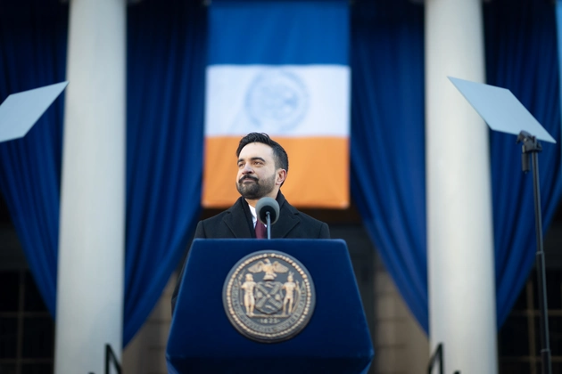
I don’t think Zohran Mamdani is evil – if by that one means someone damaging and destroying the world with evil intentions. I don’t think he’s even cynical in the way successful politicians must be to get elected. In fact, I’m beginning to think that he believes every word he says. And that is what frightens me.
His ascension to the mayorship of the great city of New York seemed as improbable as Trump being elected president in 2016. Most of my well-heeled NYC friends and certain unnamed members of my immediate family liked him. He was young. He was good-looking. He was articulate. And he had a smile that you couldn’t doubt. He looked like a young man you could trust your mother with. A nice guy. A fine fellow. A mensch.
He was also a self-proclaimed Democratic Socialist (or is it Socialist Democrat?) and “an observant Muslim,” the meaning of which I’m still ascertaining.
He was the child of Mahmood Mamdani, a chaired professor at Columbia, and Mira Nair, a respected international filmmaker. He grew up in Morningside Heights, attended Bronx Science, and then went to Bowdoin College, where he earned a degree in Africana Studies.
He spent a few years as a rapper performing under the name Mr. Cardamom before settling into work as a foreclosure-prevention counselor – a job that, in a city where evicting anyone is nearly a constitutional impossibility, is roughly as demanding as being the lifeguard at a car wash.
There is a particular kind of innocence that only East Coast money and private East Coast schools can produce, of which Zohran Mamdani might be the finest living specimen.
To his great credit, Mamdani doesn’t hide any of this. He has called his own upbringing privileged. “I never had to want for something,” he said, “and yet I knew that was not in any way the reality for most New Yorkers.”
That’s the sort of thing Mamdani can say and make it land. It’s the sentiment of a genuinely decent young man. A decent young man who has never had to make a payroll, never had to price a commercial lease, never had to watch a small business die on a 1% margin.
And then, suddenly, he was the elected mayor of one of the largest, richest, and most important cities in the world.
As soon as he took office, I stopped watching TV almost entirely and devoted my watching time to political stories on YouTube. Many of them – in LA, Minneapolis, Chicago, and New York – were shaping up to be serial dramas I did not want to miss.
The Mamdani story is especially compelling because, like all the best dramas, the heroes are never entirely virtuous and the villains are never entirely rotten – or even wrong.
So let’s give him the courtesy of taking his campaign promises seriously, because they deserve to be taken seriously before we can take them apart.
He wants to freeze the rents for the city’s two million rent-stabilized tenants.
He wants the buses to be free.
He wants city-funded childcare.
He wants to create five city-owned grocery stores to drive down the price of food.
You can understand the appeal of these things to not just the city’s working classes, but to the voters who live in neighborhoods like Morningside Heights. Who’s against cheaper rents except self-serving landlords? Who’s against feeding hungry children except voters with the hardest hearts?
And he can do it.
A rent freeze is well within a mayor’s power. Bill de Blasio froze stabilized rents twice simply by appointing the right people to the Rent Guidelines Board, and Mamdani appoints all nine of them.
When asked about the grocery stores, Mamdani and his supporters say they will work on a nonprofit basis, on city-owned land, paying no rent and no property tax, buying at wholesale. “It’s not rocket science,” one of them told a reporter. “It’s practiced all over the world.”
He’s right about that. But in places where no sane NYC resident would want to live.
Of course, when there is an adult in the room, the question will be asked: How will the city pay for all this? Mamdani has lots of ideas he feels good about, but the two that he’s locked in and is working towards are by: (1) raising the corporate tax rate from 7.25% to 11.5%, and (2) adding a 2% surcharge on incomes over a million dollars.
We’ll get to that. But first, let’s look at Mamdani’s rationale.
City-Owned Grocery Stores
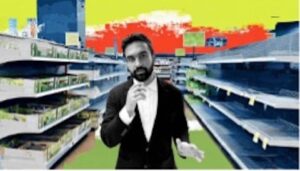
Those who support city-owned grocery stores believe that food is expensive because grocers are greedy, and that a store that declines to be greedy can therefore sell for less. This is naïve. No. It’s just plain dumb. Grocery chains already operate on slim net margins of 1% to 2%. They may be the least greedy enterprises in American commerce.
What actually happens when government gets into the business of “selling” food at prices unburdened by rent and taxes is that the private markets and grocery stores (that have been servicing the local community for decades) desist from selling at the artificially lowered prices and try to sustain themselves by selling products the government stores are not selling. It becomes untenable after several months or a year, and so they close up shop.
Deprived of the variety of free-market trade, city residents are left with a single source of food, paper goods, hygiene products, and other necessities. So the government stores must increase their inventories, which not only makes the cost of running the stores more expensive, it increases their millions of dollars in losses each year – a deficit that must be passed back to the city’s taxpayers.
But the taxes are never enough to keep the government stores operating at the same level of quality and service. So over a period of months and sometimes years, they degrade into big, dirty, ugly marketplaces selling rice and beans and the kinds of products that are commonly sold in Third World countries.
By the way, this isn’t theory. In 2003, the Democratic Socialists running Venezuela opened their first government grocery stores and promised affordable food for the poor. Within four years, Hugo Chávez was threatening to jail grocery owners and nationalize their businesses for the crime of raising prices, and the state-run Mercal chain – through which half the country’s groceries flowed – had become a monument to scarcity and queues.
Thankfully, the mayor of New York City cannot commandeer the nation’s farms. Not that he wouldn’t like to if he became president one day.
But Mamdani doesn’t need to look to Caracas to see NYC’s future if the city decides to compete with private grocers using taxpayer money. He could look across the street.
John Catsimatidis, who runs the Gristedes chain, has already said: “If the city of New York is going Socialist, I will definitely close, or sell, or move, or franchise the Gristedes locations.” And he added that, while he’s at it, he’d think about moving his corporate offices to New Jersey.
So the plan, fully realized, is to spend public millions opening government stores while driving out the man who currently feeds the neighborhood.
This is what I mean by naïveté. It is not intellectual stupidity. It is ignorance – dangerous ignorance of basic economics– that is typical of many graduates of expensive US schools.
The Rent Freeze
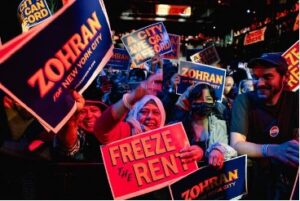
Mamdani’s rent freeze idea is just as bad but will have larger and less forgiving long-term consequences if it’s carried out. And again, the evidence is not in question.
I once devoted an entire essay to rent control, and the numbers have not improved with age. Something like 93% of American economists oppose it. When Cambridge and Brookline imposed it in Massachusetts, available rental housing fell 8% to 12%. In California, Berkeley and Santa Monica saw an 11% decline while their neighbors grew.
Here are a few more facts Nigel was kind enough to fetch for me:
* Postwar Britain managed to shrink its private rental stock by 45%, which the economist who studied it attributed bluntly to “the flight of investment from the regulated market.”
* A RAND study of Los Angeles found that deteriorating conditions – the peeling paint, the mice, the broken plumbing – clawed back 63% of the supposed benefit.
* Rent control costs New York City an estimated $4 billion in property value and $370 million a year in property taxes.
* A more recent Stanford study of San Francisco found the same machinery at work: Landlords pulled units off the market, converted to condos, and new construction fell.
* Stockholm, after decades of rent control, now rations apartments by a queue so long that the share of central leases going to people under 30 collapsed from 12.7% to 4.4% in 20 years.
As I said, rent freezes, like city-owned grocery stores, do not do what they are intended to do. They don’t create housing. They simply reward the tenant who already has an apartment while they rob everyone still looking for one. Equally important, rent control manufactures, with perfect reliability, the very “neglect” that Mamdani has now decided to punish.
But here’s the thing that worries me most…
In May, Mamdani’s administration unveiled a housing plan called “Block by Block,” and inside it is a program to take at least 10 “neglected” building portfolios and “transfer ownership to responsible stewards – stewards that include community land trusts, nonprofits, or even the tenants themselves.” The city’s housing department would be empowered to strip owners of control, push lenders toward foreclosure, and refer landlords for criminal prosecution.
I am willing to believe that Mamdani’s intention is to go after “slumlords.” But since he swapped Econ 101 for Rapping 101, he doesn’t understand what a slumlord is. In his mind, the slumlord fails to pay the heating bills and lets his building fall apart because he’s hoarding the rents to pay for his yachts and mansions on Long Island. If he was more willing to share, like Socialists are, he could keep his buildings in A-One shape and still have plenty left over for a smallish mansion and a big-but-not-yacht-sized boat.
When Mamdani’s rent control policies fail – and I have to believe he knows they will – he can get to what he thinks the real solution is: government-owned housing. Only the government, with its expansive power to tax and spend the taxpayers’ taxes, can provide good, clean, safe, and affordable housing to its denizens. That move is already in play with his talk about transferring ownership of the seized property to “responsible stewards.”
But the economic reality of rent control is this: The only way to bring prices down is to generate a greater supply of rental housing units. And the only way for the government to stimulate the production of more rental units is by making the prospect of building them attractive to real estate developers.
This, too, is not theory. I’m going to assume that everyone reading this, including my most caring and least economically savvy readers, knows that the real estate sector of the economy responds to supply and demand. So when prices do not go down after developers are given incentives to build more units, as the good-hearted Socialists believed they would, the government steps in again to courageously and inspiringly fill the void. And what you get is the housing equivalent of the Cuban grocery stores – neighborhoods of ugly, cheaply constructed affordable housing that morph into crime-ridden slums in a matter of years.
The Unintended Consequences of Good Intentions
When Socialist strategies like free and cheap food, housing, medical services, etc. are enacted and enforced on a national scale, what you get is a steady deterioration of the quality of living at the same time the country’s economy experiences a steady decline of its per-capita GDP. If the metric of your economic conscience is “the same conditions for all,” then that’s what you’ll get. The ratio of the poor to the middle-class reverses. Instead of, say, a 20-poor/ 80-middle class divide, you end up with a 20-middle class/ 80-poor population.
And what about the rich?
Well, the rich population remains pretty much the same. Of the 2% to 5% of the population that was rich when the Socialist experiment begins, half of them – if they can – leave the country with their wealth and their businesses. And they leave in their wake a vast number of formerly middle-class workers that make considerably less money or have no work at all and must subsist on the meager handouts that the government – rapidly being depleted of its tax base – is able to shell out.
The rich that can’t leave the country either become government officials to hold on to their businesses, but with much reduced compensation packages, or they give up their businesses entirely because the reduced financial benefit is not worth the stress and hard work. Then it’s back to a new government rescue operation that brings entire industries down to producing goods and services that are of such inferior quality that they lose whatever global market share they once had.
That’s the dreary reality that the Soviet Union and Cuba and Venezuela and every other Socialist country have blessed their citizens with.
Mamdani doesn’t want that. He doesn’t want it for NYC. And he probably doesn’t want it for the USA. But if he goes through with his current policies – the ones that were in fact the promises that New Yorkers voted for –he’s going to get it. And he’s going to experience the early stages of it during his first administration because there is one thing he cannot do as mayor. He cannot force NYC’s billionaires and their multibillion-dollar companies to stay in the city as their prospects for continued profits go up in smoke.
Nobody wants that.
But I fear that the image that will outlive Mamdani’s first year is the video he filmed of himself standing on the sidewalk outside Ken Griffin’s $238-million penthouse, naming the address, to announce a new tax. Griffin, who runs the hedge fund Citadel, responded by promising to “add far more jobs in Miami over the next decade as an immediate and direct consequence of the mayor’s poor decision.” The mayor picked a fight; the billionaire simply walked.
And he’s not alone. Apollo Global Management is building a second headquarters and says it expects “most of our future growth” to happen there rather than in New York. JPMorgan’s New York headcount has fallen from roughly 30,000 to 24,000 in a decade while its Texas workforce sailed past it.
The city is keeping the jobs it has and losing every one it might have had.
The reason this is lethal rather than merely unfortunate has to do with arithmetic that Mamdani, of all people, should respect, because it is the arithmetic of inequality he campaigns against: The top 1% of New York City filers pay somewhere between 40% and 48% of the city’s personal income tax.
I made this point before the election, and it bears repeating: By raising corporate taxes and putting a surcharge on high incomes, you are not taxing a class. You are taxing a few thousand intensely mobile individuals that can change their personal and/or business addresses faster than your comptroller can revise a spreadsheet.
When enough of those taxpayers move, the hole it leaves is big.
From Nigel:
France learned this the hard way: Its wealth tax drove out an estimated 10,000 or more rich residents, and the economist Eric Pichet calculated that it ultimately cost the treasury nearly twice what it raised, until Emmanuel Macron – no one’s idea of a reactionary – repealed it in 2017. New Jersey learned it from a single man, when the departure of the hedge-fund billionaire David Tepper for Florida threatened the state budget, because fewer than 1% of residents supplied about a third of its income tax and a 1% forecasting error was worth $140 million. Venezuela learned it on a catastrophic scale: Since 2013, nearly eight million of its most productive, tax-paying citizens have fled – a quarter of the population, and with them the larger share of whatever the country’s economy and treasury might have been.
And this:
Half a century ago, New York tried a gentler version of exactly this – generous spending the revenue couldn’t support, financed on the assumption that the money would always be there. Between 1970 and 1975, the city’s spending grew 80% while its revenue grew 54%. The middle class fled to the suburbs, taking its taxes along.
The city shed something like 570,000 jobs. And in the spring of 1975, New York simply ran out of money, the banks having concluded they would no longer lend to it. The Daily News rendered the federal response in the most famous headline in the city’s history: FORD TO CITY: DROP DEAD. It took a humiliating federal bailout and the better part of a decade to climb out.
That is the lesson Mamdani’s own city paid the highest possible price to learn, and the deepest irony of his administration is that the man who has arrived to lecture New York about justice seems never to have studied the one chapter of its past that bears directly on what he intends to do. He is not breaking new ground. He is reading a suicide note aloud and mistaking it for a manifesto.
I wrote an essay some years ago called “Why Do Smart People Believe in Socialism?” The opening line was, “Karl Marx wasn’t stupid. Neither are most of the college professors and journalists who believe in the core tenets of Socialism.”
I could have been writing Mamdani’s biography. The trouble was never intelligence. The trouble is that there has never been a socialized economy that worked – that improved the general welfare of the population at large – and the people most certain that it could work are invariably the ones who have suffered least from the experiment.
So no, I don’t think Mamdani is evil. No, he is a true believer who confused a sheltered life for moral insight and who, because of a bad education in very expensive private schools, looked at the most productive city on earth and saw a mountain of other people’s money waiting to be spent more wisely.
A city can survive a cynic. But can it survive a sincere man who’s never learned how to count?
HOLD THE PRESS!
This just came in: Mamdani’s on a Roll!
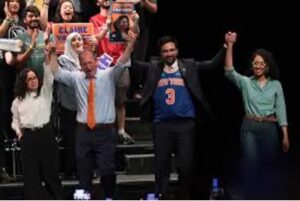
On Tuesday, in the New York congressional primaries, all three candidates endorsed by Mayor Zohran Mamdani defeated more moderate rivals, including two incumbents. The winners include former City Comptroller Brad Lander, who favors the complete abolishment of Immigration and Customs Enforcement; Democratic Socialist and New York State Assemblymember Claire Valdez, who also supports abolishing ICE and has plastered the words “Free Palestine” on her campaign signs; and community organizer and Democratic Socialist Darializa Avila Chevalier, who has refused to condemn Hamas, was part of a student group at Columbia that has since called for “Death to America,” and said that a world without borders, prisons, and police is “the only moral way forward.”
From The Free Press: “The results mark a seismic shift in the Democratic Party, which for months has been consumed by an internal battle between its traditional old guard and an insurgent, Socialist, and virulently anti-Israel left wing. Tuesday night was only the latest sign that the latter group is winning that fight.”